
Last updated November 15, 2026
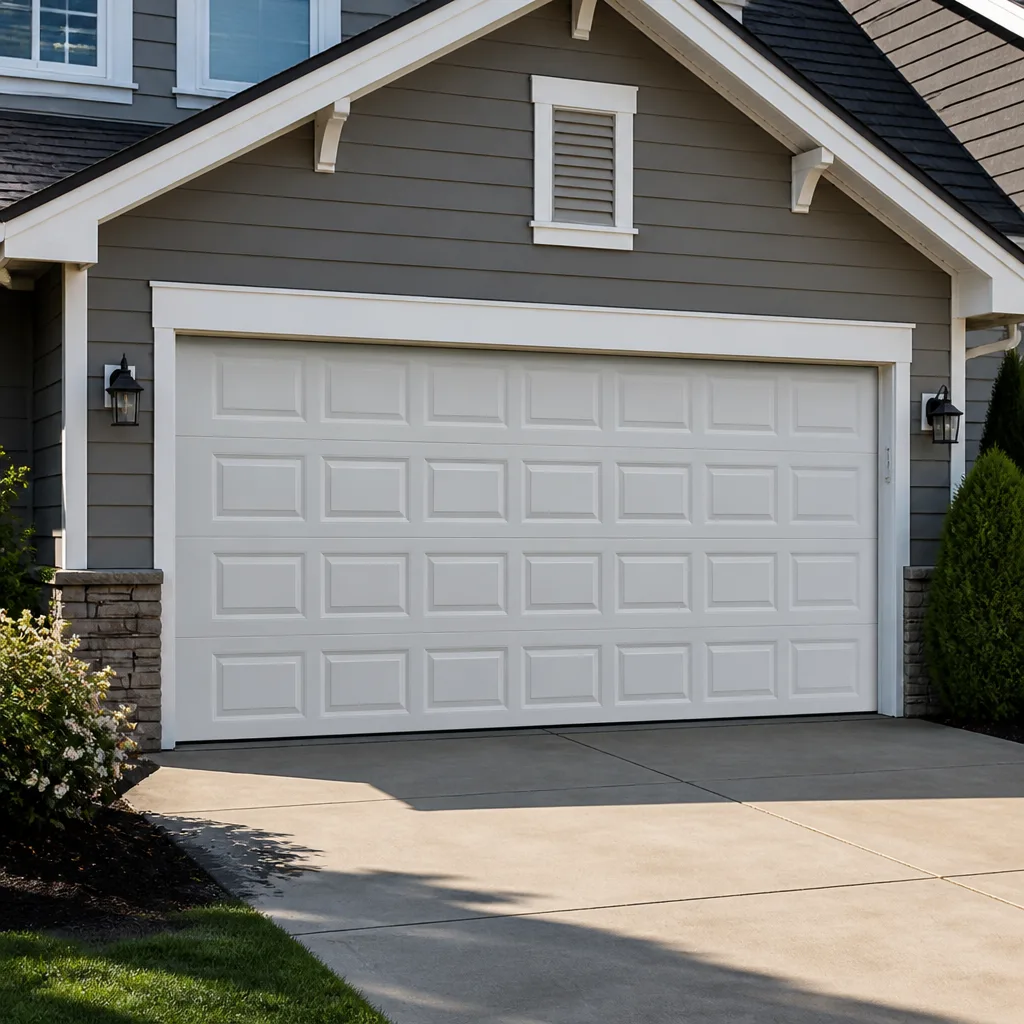 Raised-panel steel
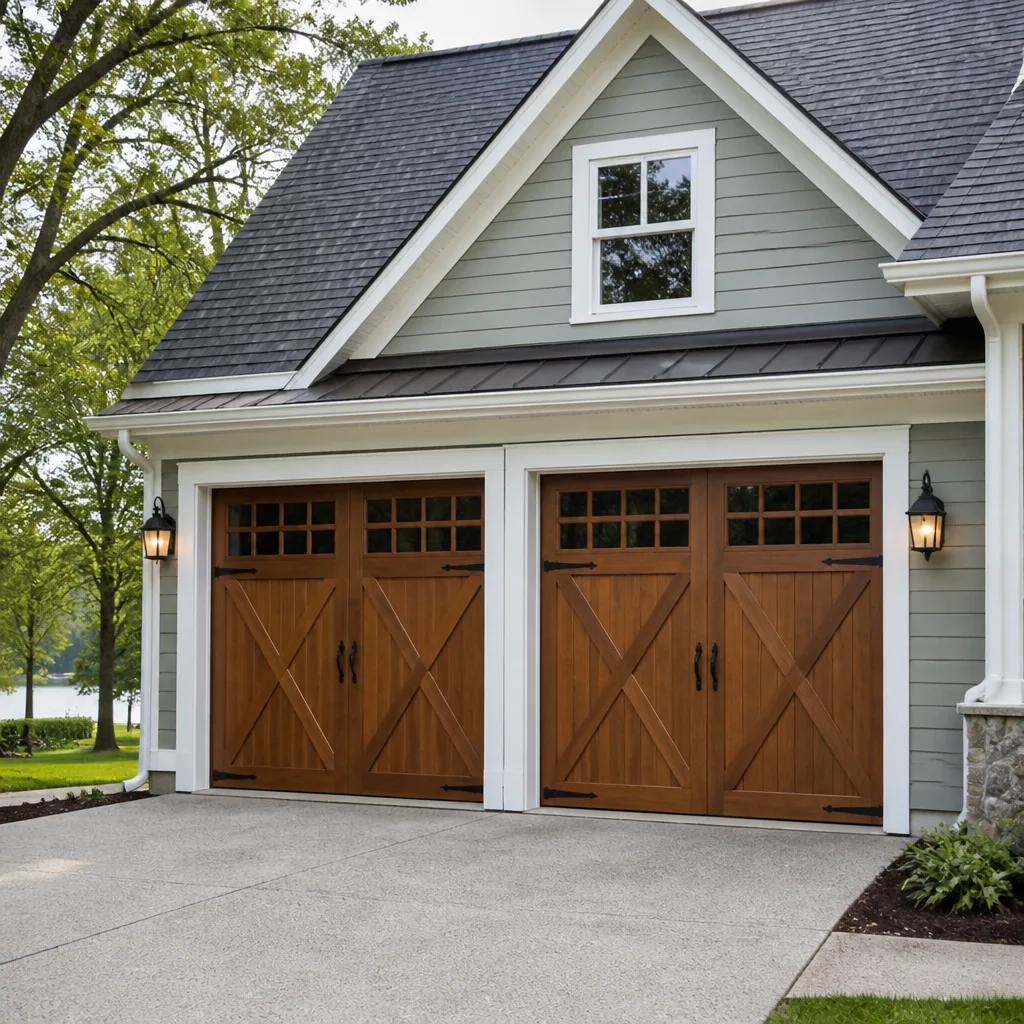 Carriage house
 Modern flush
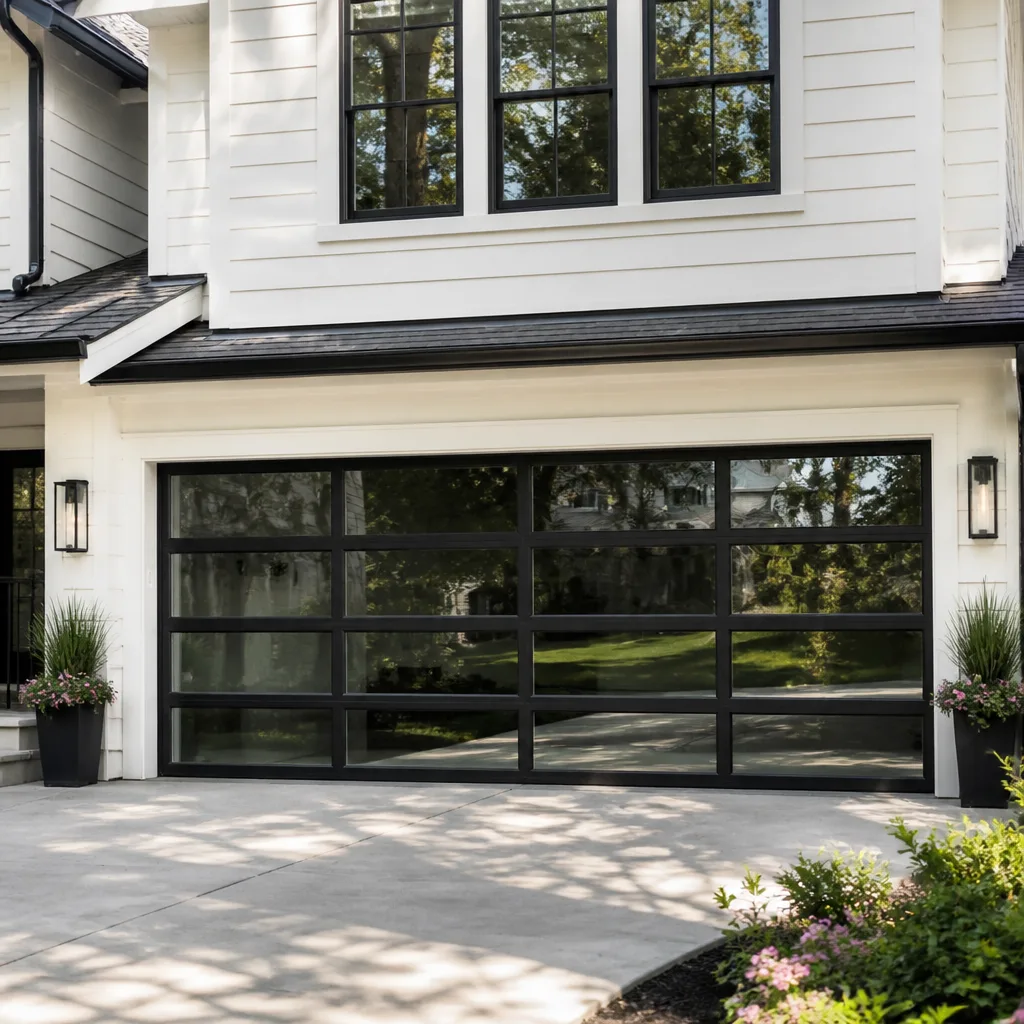 Full-view glass
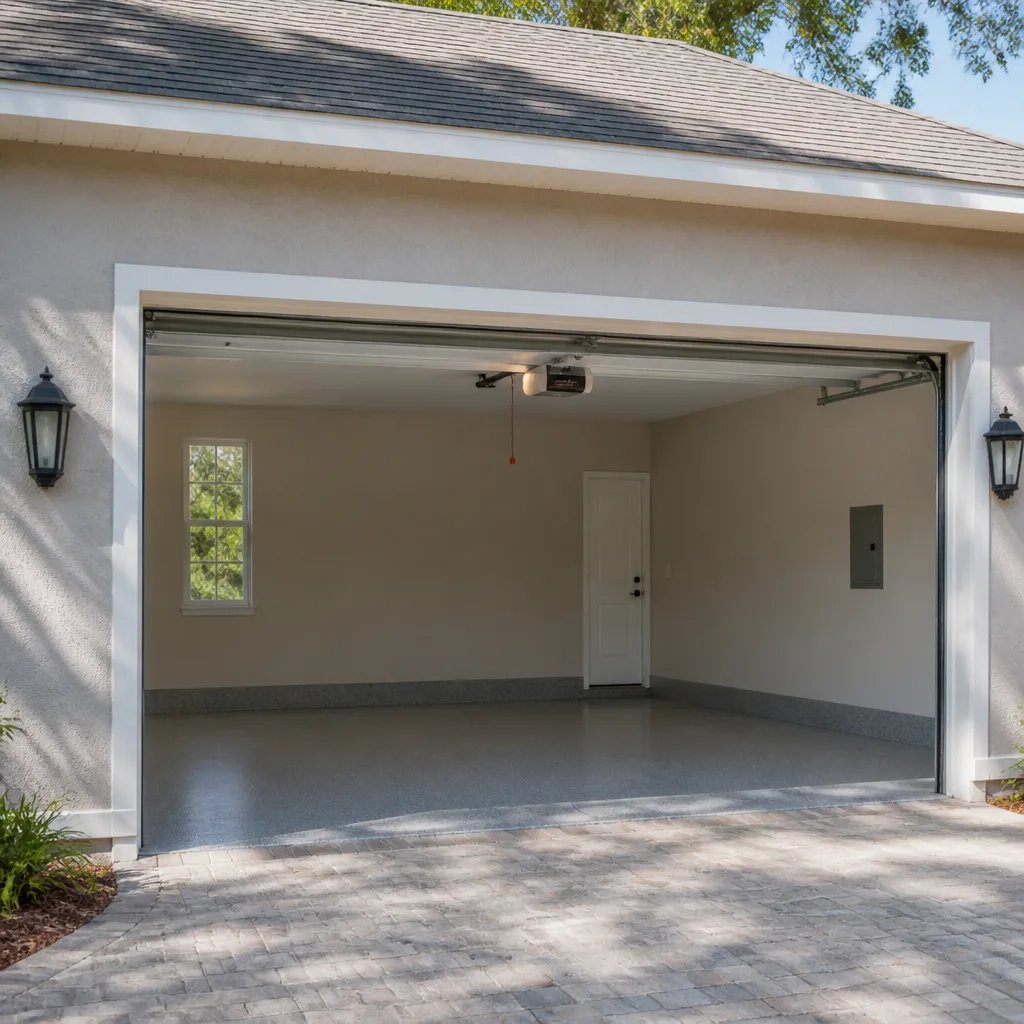 LiftMaster openers
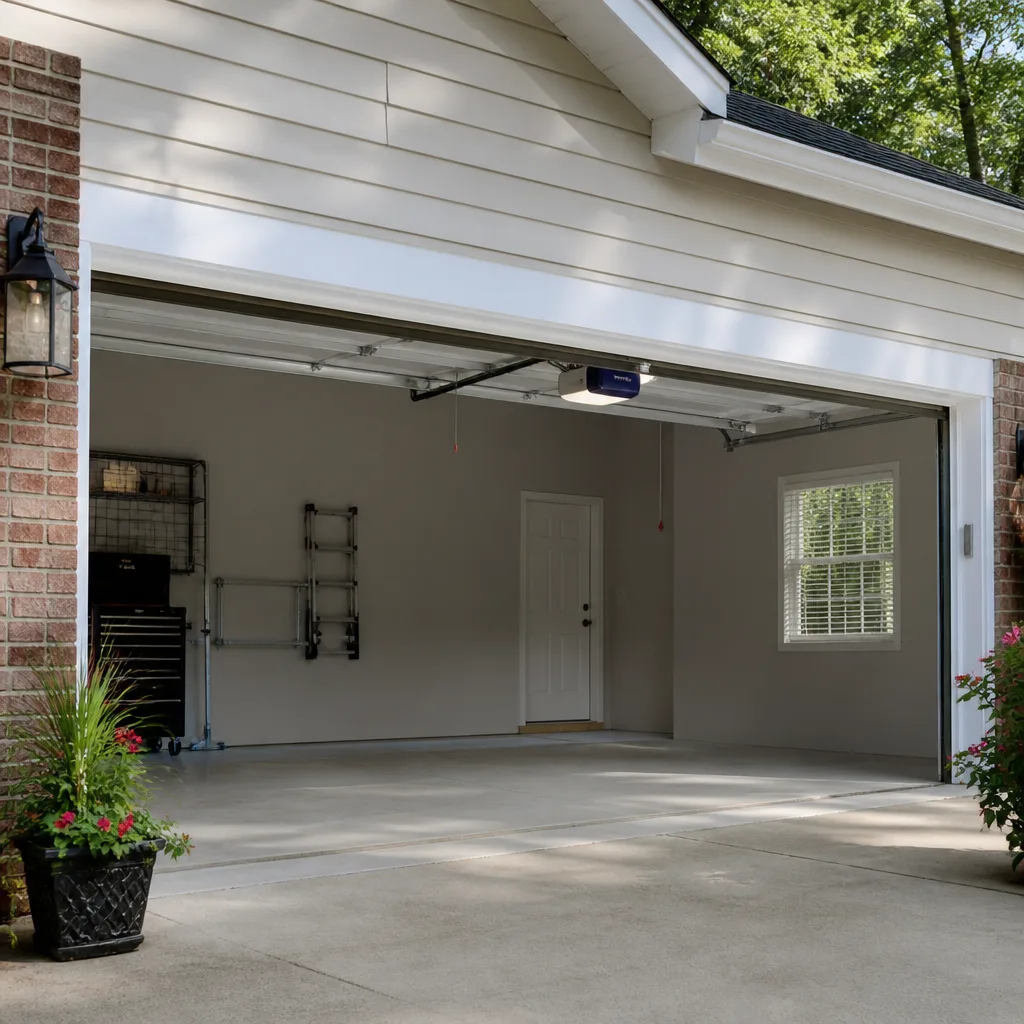 Chamberlain openers
Full 25-point door and opener safety check with every visit - springs, cables, rollers, tracks, and your LiftMaster or Chamberlain opener included
You get a price before we start. It does not change when the pro arrives.
Get your free estimateGarage Door Emergency Preparedness Guide for Syracuse Homes
Most garage door emergencies in Syracuse don’t start with a broken spring. They start with ice. When the bottom rubber seals freeze to the concrete threshold and a car nudges the door open anyway, the panel bends and the cable snaps, turning a two-minute de-icing chore into a real repair. The same pattern repeats with power outages, wind-driven ice storms, and a door that simply won’t close. This guide walks through each of those scenarios and gives you a pre-planned response, plus the small kit and habits that keep a Syracuse garage door working through a Central New York winter. You’ll learn the safe method for each situation, the moves that cause damage, and when to stop and call a technician.
Quick Answer
The three garage door emergencies that actually hit Syracuse homes are a frozen threshold, a power outage that traps the door, and a door that won’t fully close and leaves the house exposed. Each one has a safe response, and two of the three are preventable with basic winter prep and a short emergency kit. Manual release and controlled de-icing handle most of these without damage. Forced operation, whether by car or by hand, is what turns a minor issue into a bent panel or a snapped cable.
Styles & brands we work with
- Raised-panel steel
- Carriage house
- Modern flush
- Full-view glass
- LiftMaster openers
- Chamberlain openers
Table of Contents
- What happens when a Syracuse garage door freezes shut
- How to open a garage door safely during a power outage
- Re-engaging the automatic opener safely afterward
- How to secure a garage door that won’t close
- The emergency kit every Syracuse garage should have
- How to judge a storm-damaged door before the technician arrives
- Pre-winter maintenance that prevents emergencies
- When to call a professional
What happens when a Syracuse garage door freezes shut
A frozen garage door happens when the weather seal at the bottom of the door bonds to the concrete threshold as water freezes overnight. Syracuse winters make this routine, not rare. The door physically welds shut, and the opener motor runs against a load it was never designed to move. If the homeowner then rolls the car forward expecting the door to give way, the bottom panel bends and the lift cable takes the strain. That’s the damage.
The safe response is patient. Rather than forcing anything, remove the ice bond first.
- Turn off the opener at the wall switch so nothing cycles while you work.
- Identify where the seal is bonded to the concrete. It’s usually the full width, but the corners can hold hardest.
- Apply a threshold de-icer or an ice-melt product designed for concrete along the base of the seal. Avoid rock salt, which damages concrete and rubber.
- Wait several minutes. Do not pry the seal with a screwdriver or pry bar.
- Once the ice releases, run the door up and back down once by hand or through the opener to confirm free travel.
- Wipe the threshold dry and apply a silicone or petroleum-free lubricant to the rubber seal to slow the next freeze.
What causes damage: forcing the door with a vehicle, striking the seal with a shovel, or pouring boiling water on the threshold. Boiling water can crack concrete and refreezes almost immediately in a Syracuse cold snap. The right tool is a de-icer and a few minutes of patience. We work on Raynor and Clopay doors every week in Syracuse, and the top panels we see replaced most often are the ones bent from forced entry.
How to open a garage door safely during a power outage
Power outages during Syracuse snowstorms or line-down wind events are common, and a garage door with an opener won’t lift without current. Every residential opener has a manual release cord, and pulling it disconnects the trolley so the door can be moved by hand. The trick is doing it without letting the door drop on you or on the car.
- Locate the red manual release cord hanging from the trolley rail. It should be within reach from the floor.
- Lift the door a few inches with one hand while you pull the release cord with the other. This takes tension off the trolley and prevents a violent snap.
- Raise the door fully by hand. A properly balanced door lifts with one hand. If it fights you or feels heavy, stop and lower it slowly: the spring is out of balance and this is a repair job, not a manual-open job.
- For a door that must stay open during the outage, most modern openers have a locking mechanism that keeps the door in the raised position. Look for it on the opener housing or the door track. If yours doesn’t have one, prop the door safely and keep people clear of the opening. Don’t step away while a door is propped.
- To close manually, lower the door slowly. Don’t let it free-fall. Panels dent and fingers get caught when it drops.
Never walk under a raised manual-release door that isn’t braced. A vehicle can exit while someone guides the door, but no one should walk beneath it. LiftMaster and Chamberlain openers both use this same release system, and the procedure is identical for both.
Re-engaging the automatic opener safely afterward
Reconnecting the opener to a manually released door is where many homeowners make a small mistake with a big consequence: the door cycles unexpectedly while someone is standing under it. Do this by the numbers.
- Close the door fully by hand first. The trolley reconnect only happens at the closed position.
- Inspect the trolley and the arm it rides on. Look for damage before you re-latch anything.
- Most openers reconnect automatically when the door is cycled once through the opener: the trolley slides back into the carrier. Some units have a lever you flip to re-lock. Consult the opener manual for the exact method.
- Stand clear of the door and press the wall switch once. The opener should pull the door up normally. If it grinds, stops, or the trolley doesn’t catch, turn it off and stop.
- Test the safety reverse. Lay a two-by-four on the threshold and lower the door. It should reverse within the first third of travel. If it doesn’t, the safety sensors or force limit need adjustment before the door is used with the opener.
- Clear the drive and remove the board before resuming normal use.
If the opener motor runs but the trolley doesn’t engage, the drive gear may have failed. This is a common failure on older Genie and Chamberlain units and it’s a repair job. A door that’s been manually operated during a prolonged outage is worth a professional check afterward if the travel feels rough.
How to secure a garage door that won’t close
A door that won’t close is the most underrated emergency on this list. It’s not inconvenient so much as exposed: the garage is now an open door into the house. The usual culprits are a misaligned safety sensor, a track obstruction, or a snapped spring that leaves the door riding high. The safe temporary fix depends on which one it is, and what you should never do is leave the house or go to bed with the door up and no plan.
- Misaligned safety sensors: If the door goes down partway and reverses, the sensors on either side of the threshold are misaligned or blocked. Wipe the lenses, check both beams line up, and confirm the LED indicator on each is steady. If realigned, the door will usually close normally.
- Obstruction on the track or threshold: Clear the track of ice, debris or a fallen tool. Don’t force the door past a bent track.
- Snapped spring: The door is now deadweight. Do not try to force it down. If it must be secured overnight, lower the door by hand from a position to the side of the door (never under it), set the manual lock or drop a sturdy bar through the track slots, and post a warning so no one tries the opener. A spring replacement requires a trained technician because the torsion spring is under extreme tension.
What not to do: wedge something against the bottom of the door and leave it, block the beam sensor with tape, or disconnect the opener and walk away without securing the opening. Any of those leaves the home vulnerable. If the door can’t be secured, call us. We answer 24/7. A call outside dispatch hours is booked into the next opening, Sunday through Friday, 7am to 7pm.
The emergency kit every Syracuse garage should have
The difference between a two-minute response and a bent panel is what’s already in the garage when the problem hits. This kit costs very little and covers the scenarios most likely in a Central New York winter. Put the items in a single bin near the garage entry so nothing goes missing.
- Threshold de-icer rated for concrete and rubber. Apply before a forecast storm as an anti-icer, not after the freeze.
- Silicone spray lubricant for the rubber seal and the door’s rollers. Light, not greasy. Petroleum jelly works on the seal if you’re out of silicone.
- A broom and a plastic snow shovel kept inside the garage. Clear the drift in front of the door after every significant snowfall; you want no snowbank piling against the seal.
- A flashlight with fresh batteries, wall-mounted. Power outages are common enough in Syracuse that this belongs on the wall, not in a drawer.
- A two-by-four, about 12 inches long. This is your safety-reverse test block, and it doubles as a door prop if needed.
- The opener manual. Know the reconnect procedure for your specific brand before you need it. A printed page beats a phone search by flashlight.
- Work gloves for handling a frozen door or a rough track edge.
That’s the whole kit. None of it requires expertise to use safely. What it does is buy you time and options while the storm passes, which is far better than hoping the door cooperates.
How to judge a storm-damaged door before the technician arrives
Ice storms and wind events in Syracuse can leave a door out of alignment, off its track, or with a bent panel. Before you cycle it with the opener, know whether the door is safe to operate. The judgment is simple: if any part of the door looks or feels wrong, leave it closed until it’s inspected.
Here is how to assess it from outside the movement path:
- Look at the vertical tracks. Are they straight and plumb, or bent inward or out? A bent track means the rollers will bind. Leave the door closed.
- Look at the bottom panel. A bent or buckled panel will catch the threshold and can crack the door open mid-cycle. Leave it closed.
- Look at the lift cables. Any cable that’s off its drum, crossed, or noticeably slack is a safety issue. Do not touch it and do not operate the door.
- Look at the spring. A visible gap in the torsion spring means it’s broken. Stop there.
- Test the balance by hand with the door closed and the opener off: lift a few inches, then let go. A balanced door holds. A door that slams down or feels unusually heavy needs a technician.
If all five checks pass, the door is likely safe to use while you wait. If any check fails, close the gap to the house with a manual lock and call. Our technicians have up to 10 years of experience diagnosing exactly this kind of damage, and we can work on the full range of systems most Syracuse homes already have installed. We answer 24/7. Fast dispatch from 7am to 7pm, Sunday through Friday.
Pre-winter maintenance that prevents emergencies
The best emergency response is the one you never need. A single pre-winter tune-up in Syracuse, done before the first hard freeze, addresses almost every issue this guide warns about. It’s not complicated, and much of it you can observe and report rather than do yourself.
- Lubricate the rollers, hinges, and spring with a light silicone or lithium spray. Do not grease the tracks themselves; the rollers roll, they don’t slide.
- Wipe the bottom rubber seal and treat it with a rubber-safe lubricant so ice has less to bond to.
- Test the safety reverse with the two-by-four from your kit. Adjust the force limit if the door needs it. This is a one-time dial adjustment in the opener head.
- Clear and inspect the tracks for debris, packed ice, or grit.
- Check the weather seal for cracks, tears, or separation. A compromised seal is the biggest cause of frozen doors.
- Test the opener’s battery backup, if it has one. Snowstorm outages are exactly when that feature earns its cost.
If your door is older or a balance check feels wrong, pre-winter is the right time to have it assessed rather than mid-storm. That’s the practical case for scheduling any garage door repair in September or October, before the first ice.
When to Call a Professional
Some emergencies are yours to handle, like a frozen threshold or a power outage released by hand. Others need a trained technician:
- Any broken torsion or extension spring. The spring is under extreme tension and a wrong move can cause serious injury.
- Any cable that has snapped, come off its drum, or looks slack.
- A bent track or a door that’s out of alignment after a storm.
- An opener motor that runs but won’t lift the door, or a door that reverses immediately during closing.
- A door you can’t secure overnight and can’t safely leave closed.
For those, stop and call. Southgate Garage Door Service offers free estimates in Syracuse, is licensed and insured, and works across LiftMaster, Chamberlain, Genie, Clopay, Amarr, Wayne Dalton, Craftsman, and Raynor. Call (855) 360-7984 for a free estimate. One call handles diagnosis, parts, and installation without passing you to another contractor. We answer 24/7. A call outside dispatch hours is booked into the next opening, Sunday through Friday, 7am to 7pm. The price is quoted and agreed before any work starts, so a written estimate sets the final price.
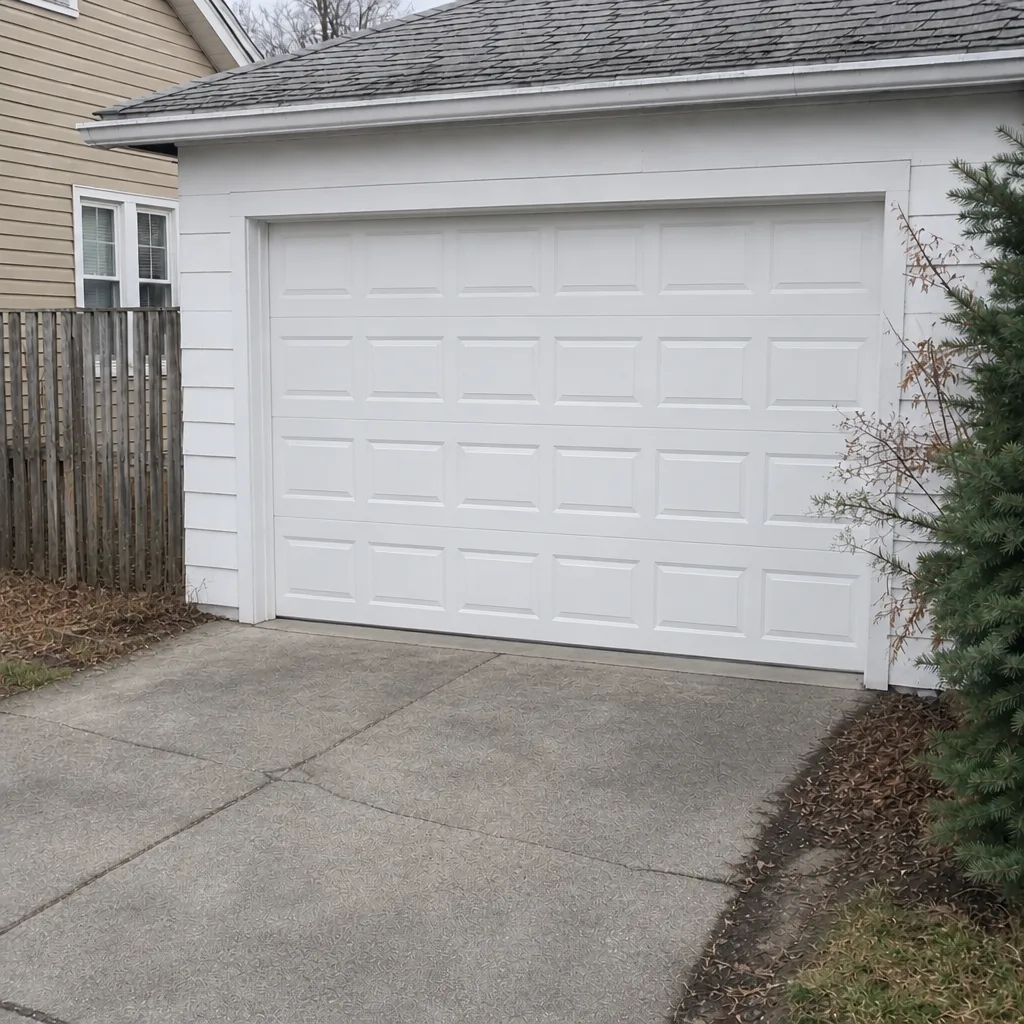
See the difference
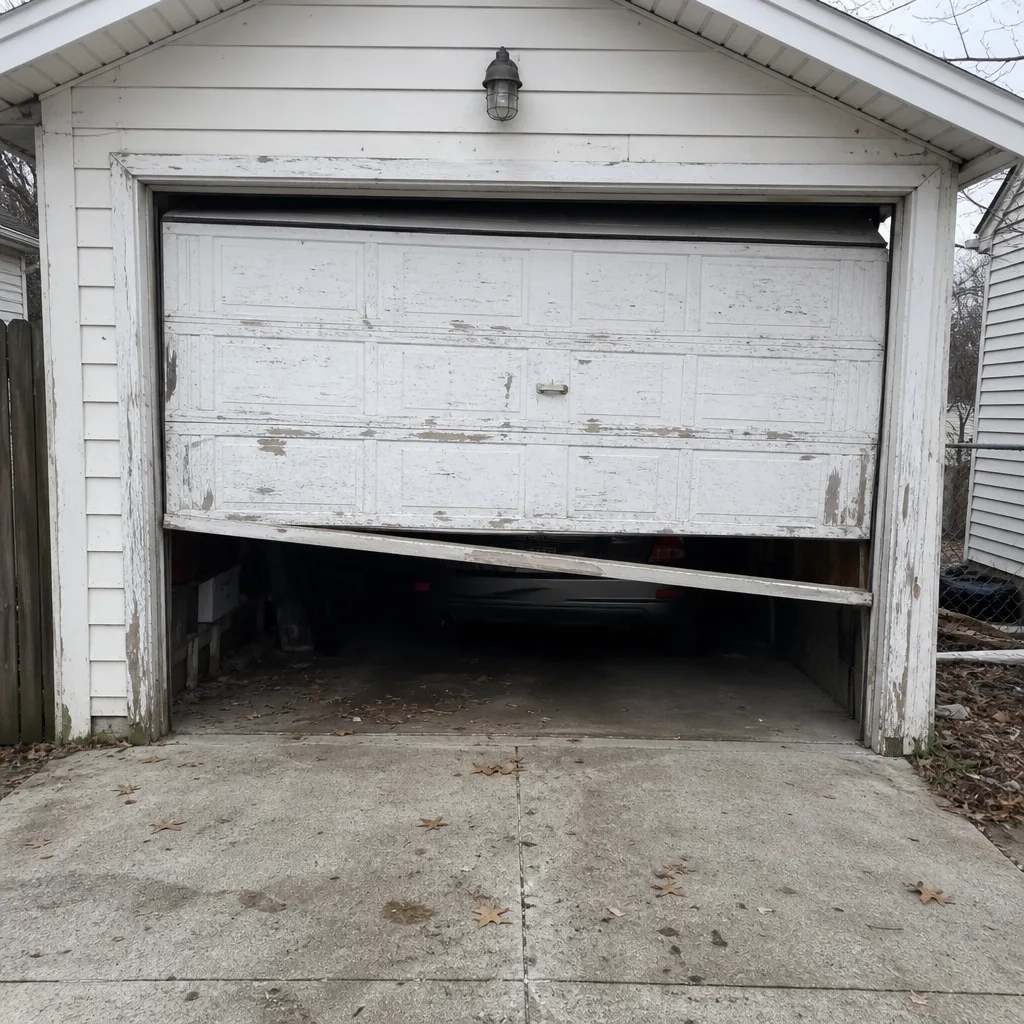 Before
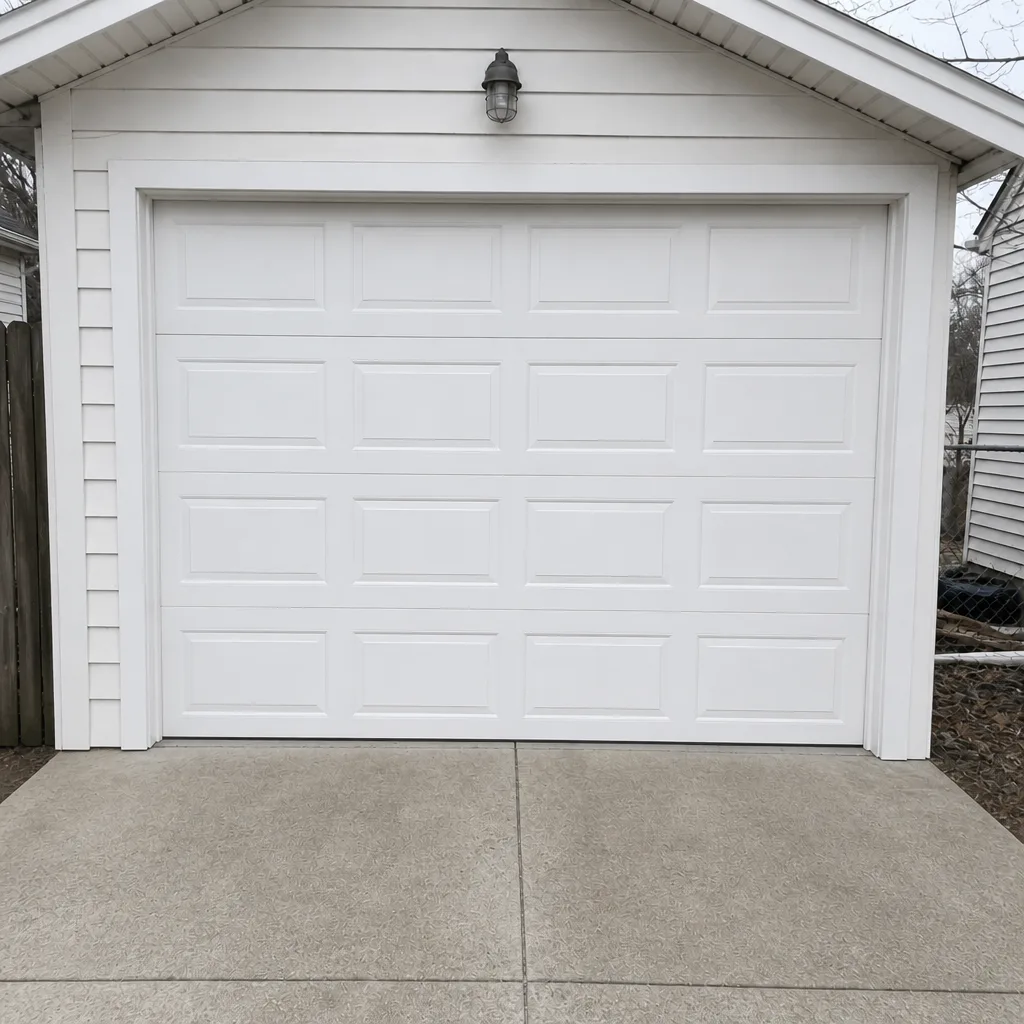 After
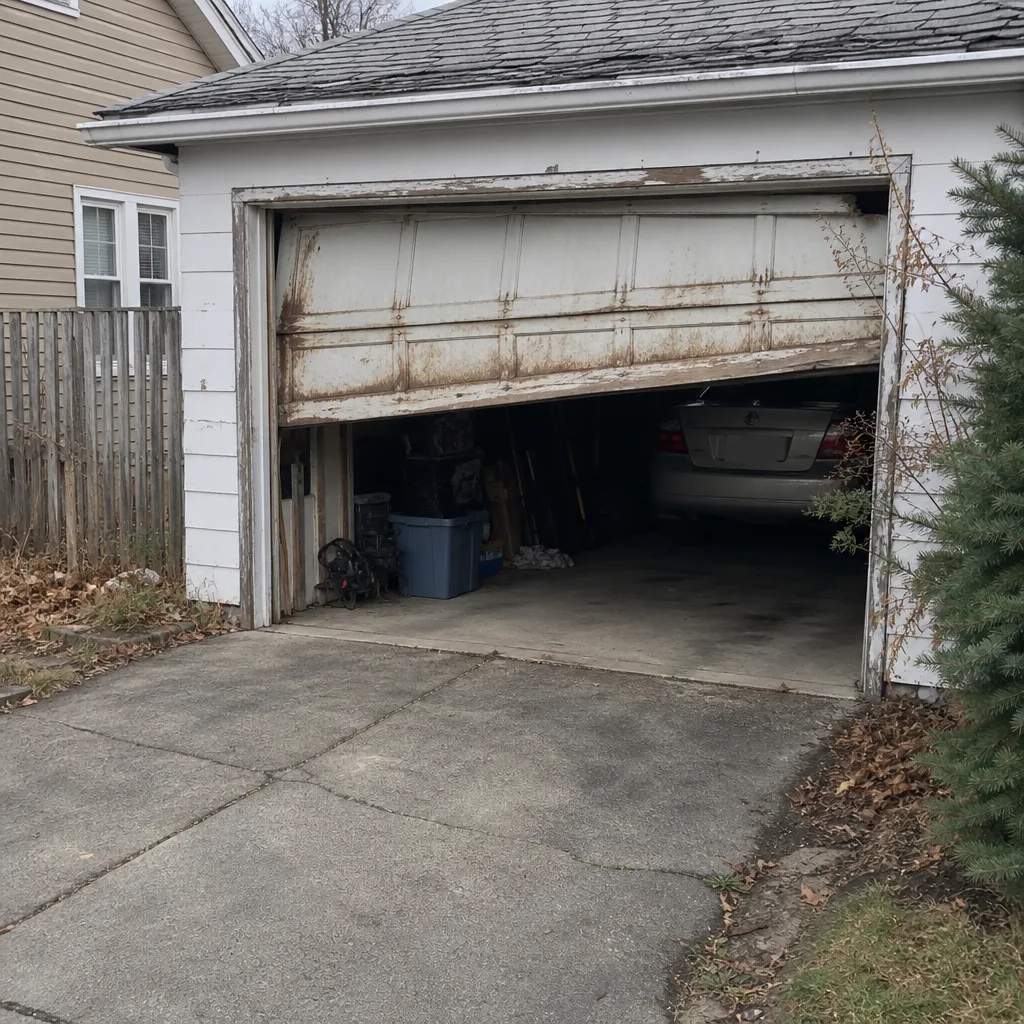 Before
 After
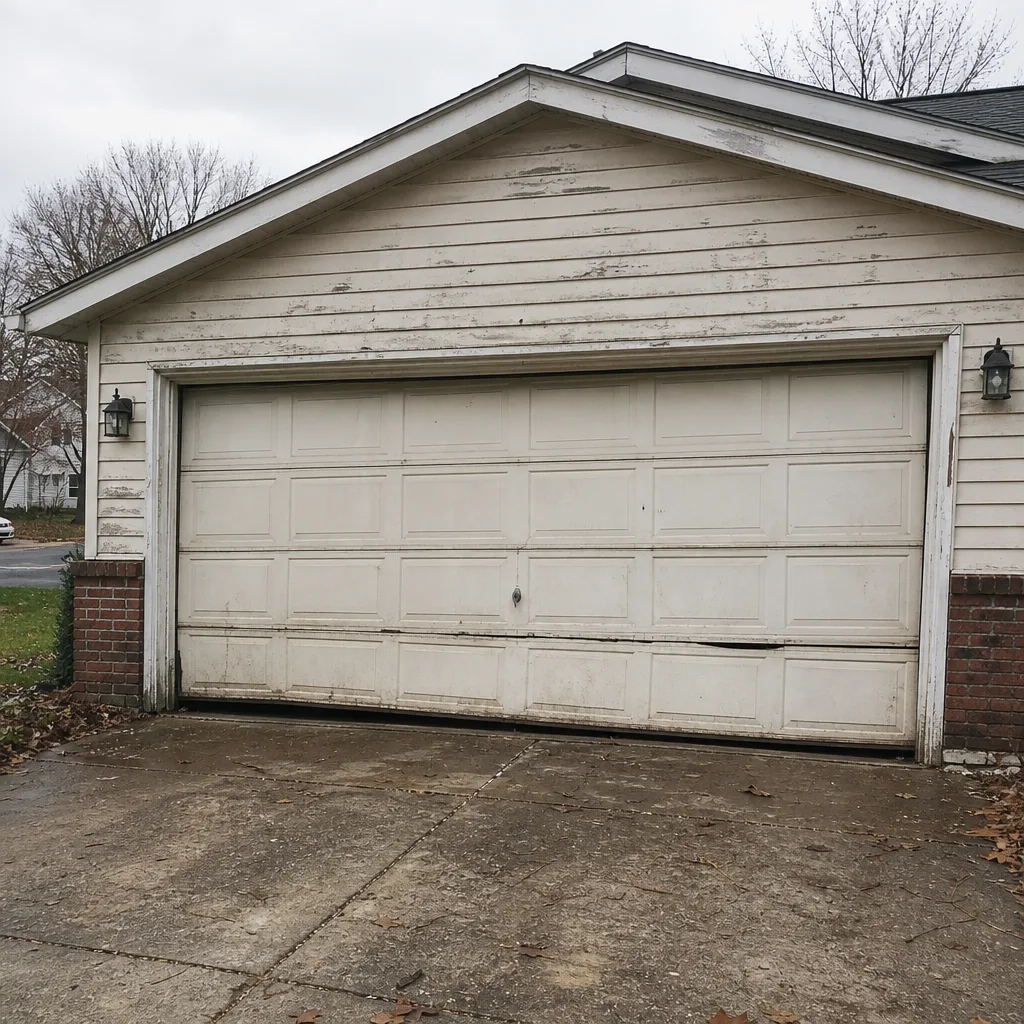 Before
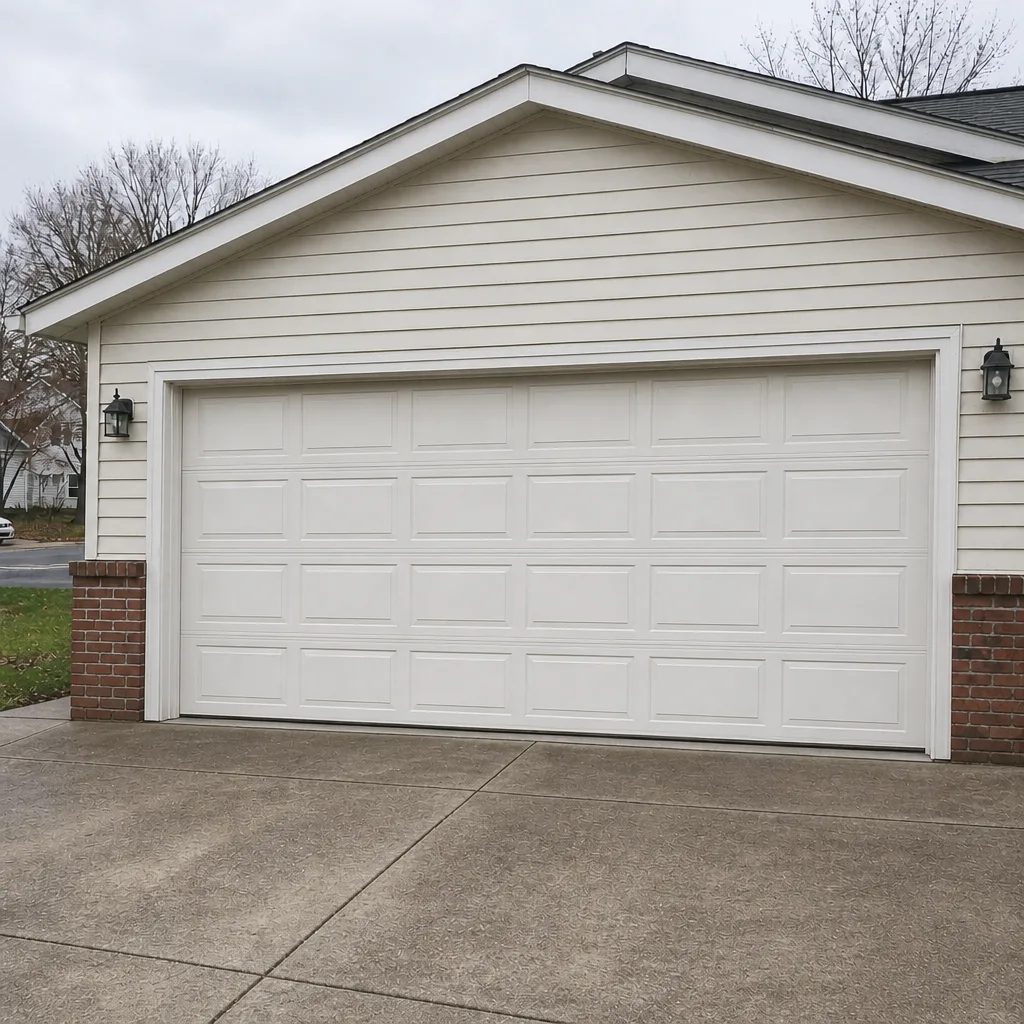 After
Frequently Asked Questions
No. Prying the seal can tear the rubber and bend the bottom panel. De-ice the threshold first with a concrete-safe de-icer, wait for the seal to release, then lift the door once it moves freely. If the door still won’t budge with a gentle lift, the spring or track may be the problem and you should call for an inspection.
Pull the manual release cord on the trolley, lift the door by hand, and pull the car out while someone guides the door if needed. Don’t walk under a raised door that isn’t braced. After the outage, close the door fully and cycle the opener once so the trolley reconnects, then test the safety reverse before normal use.
Check the safety sensors first; a misaligned or dirty beam is the most common cause of a door that reverses. Clear any ice or debris from the threshold. If the door still won’t close, secure it with a manual lock or by lowering it by hand and setting it, and call for help rather than leaving the house open. We answer 24/7. A call outside dispatch hours is booked into the next opening, Sunday through Friday, 7am to 7pm.
Apply threshold de-icer to the base of the door and the seal before the freeze, not after. It’s the cheapest, fastest preparation and it prevents the most common garage door emergency we see in Syracuse. A rubber-safe lubricant on the seal helps too.
We work on LiftMaster, Chamberlain, Genie, Clopay, Amarr, Wayne Dalton, Craftsman, and Raynor. That range covers the brands most common in Syracuse homes, so you’re not handed off if you have an older or less-common unit. Call (855) 360-7984 to confirm yours before scheduling.
We do same-day repair when scheduling allows and dispatch Sunday through Friday, 7am to 7pm. Call (855) 360-7984 and we’ll book the earliest opening for your door. If your door is unsafe to use, tell us when you call so we can prioritize it.
No. You get a written estimate for a garage door repair before any work begins, and that estimate sets the final price. If the diagnosis reveals something different than expected, we explain the revised estimate before touching the door.
Common Mistakes to Avoid
- Forcing a frozen door with a car. The bottom panel bends first, then the lift cable snaps. A dollar’s worth of de-icer prevents a repair.
- Pouring boiling water on a frozen threshold. It cracks concrete and refreezes within minutes in Syracuse cold. Use a concrete-safe de-icer instead.
- Standing under a manual-release door. A properly balanced garage door stays up once raised, but a door with a broken spring or weak balance will drop. Keep everyone clear of the opening.
- Ignoring a door that reverses while closing. That’s your safety reverse system working, not a nuisance to trick. Blocking the sensor to close the door removes a safeguard that protects children and pets.
- Leaving a door open overnight after it won’t close. The garage is now an open path into the home. Secure it with a manual lock or lower the door by hand and call for help.
- Waiting until the storm to test the opener. Test the safety reverse and the battery backup before the first freeze. A failure in January is a bigger problem than a check in October.
- Skipping the pre-winter tune-up. Lubrication, seal inspection, and a balance check prevent most of the emergencies in this guide.
The Bottom Line
The garage door emergencies that actually hit Syracuse homes are a frozen threshold, a power outage, and a door that won’t close, and each has a safe, planned response. De-ice instead of forcing. Use the manual release correctly and reconnect with care. Secure an open door and call rather than leaving it vulnerable. Keep a small kit in the garage and schedule one pre-winter tune-up before the first freeze. Those habits prevent most of the damage. When the problem is a spring, a cable, a track, or an opener, stop and call a technician. Southgate Garage Door Service offers free estimates across Syracuse for everything from a garage door opener repair to a full new-door installation. Call (855) 360-7984. We answer 24/7. Fast dispatch from 7am to 7pm, Sunday through Friday.
Written by the team at Southgate Garage Door Service.