
Last updated November 15, 2026
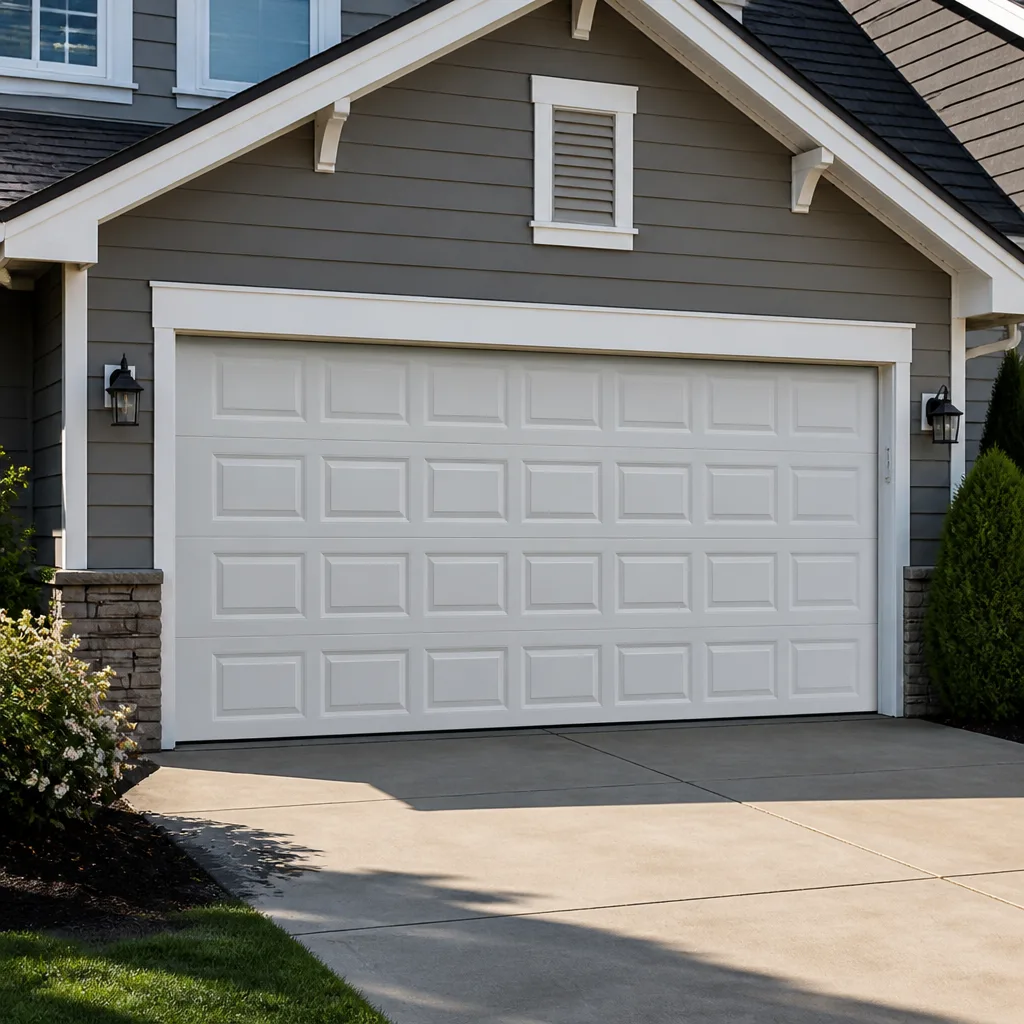 Raised-panel steel
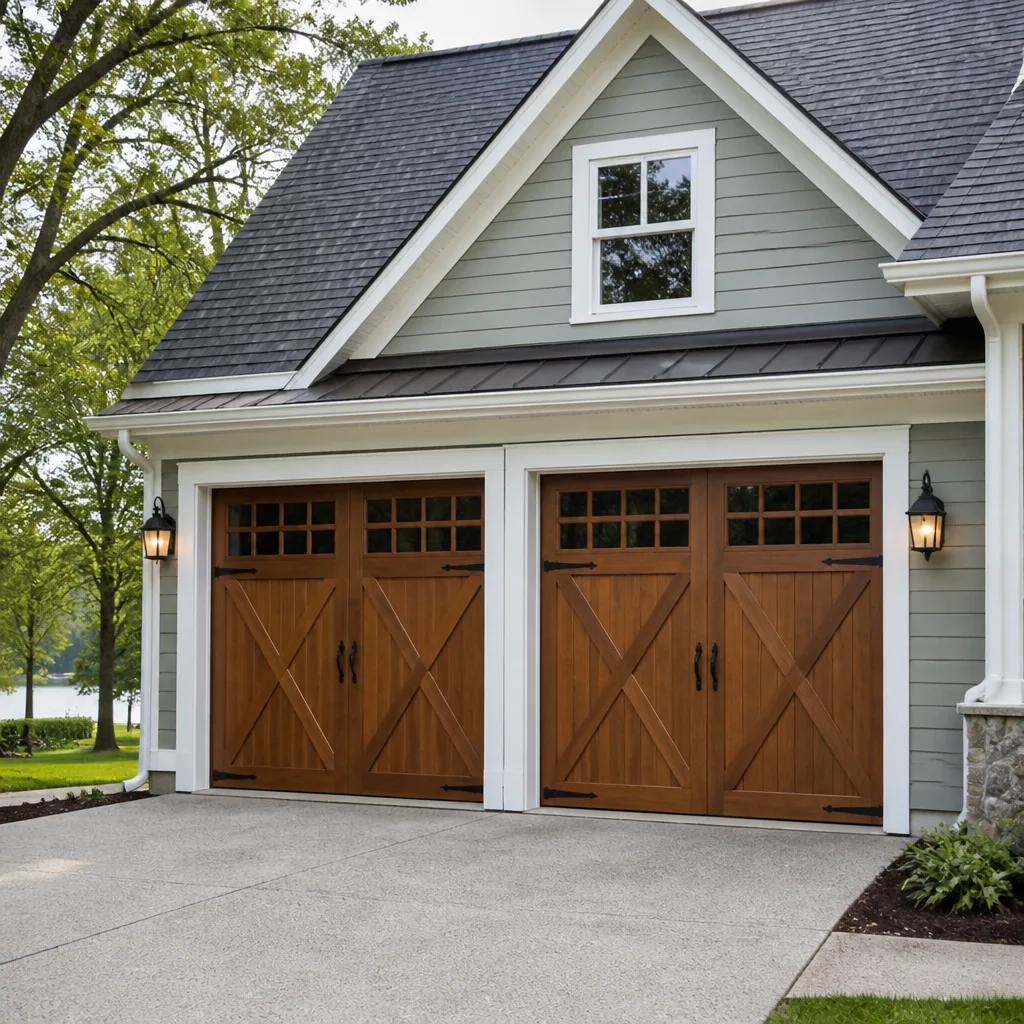 Carriage house
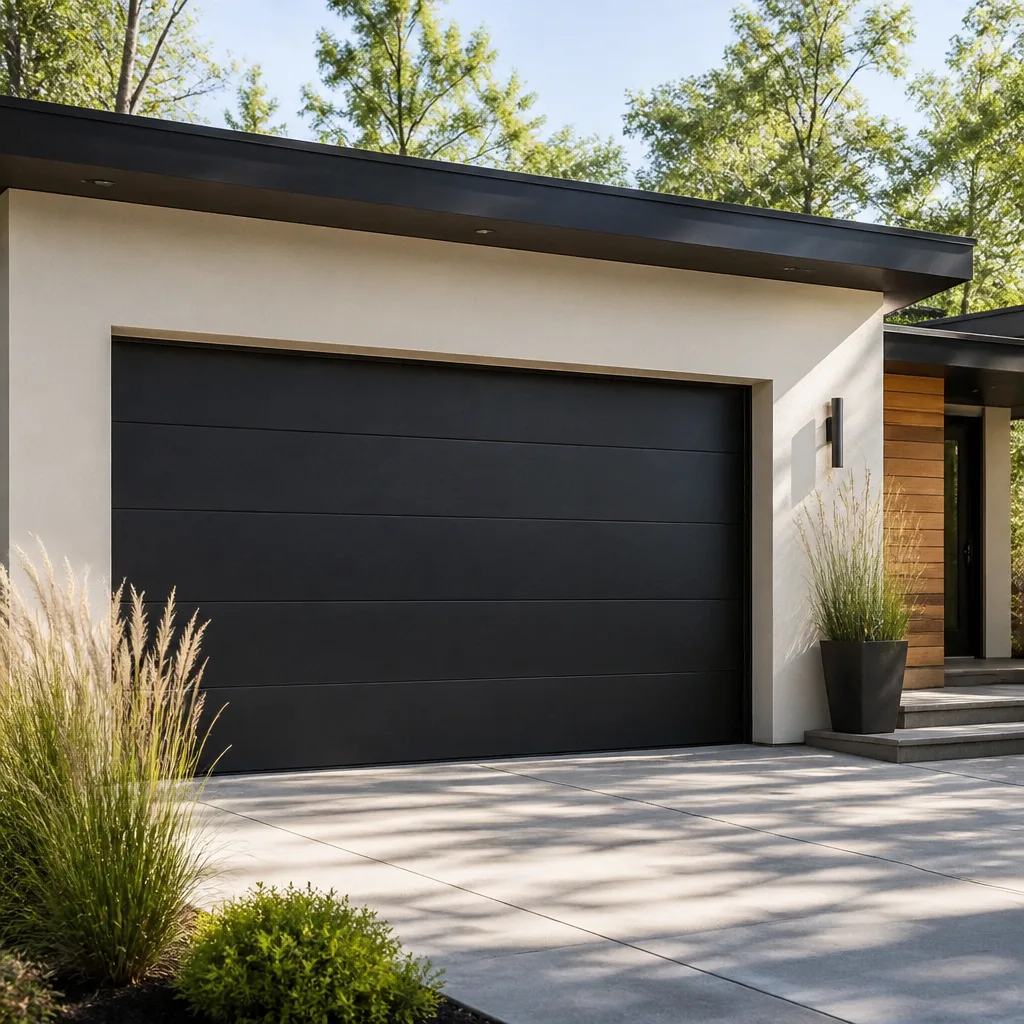 Modern flush
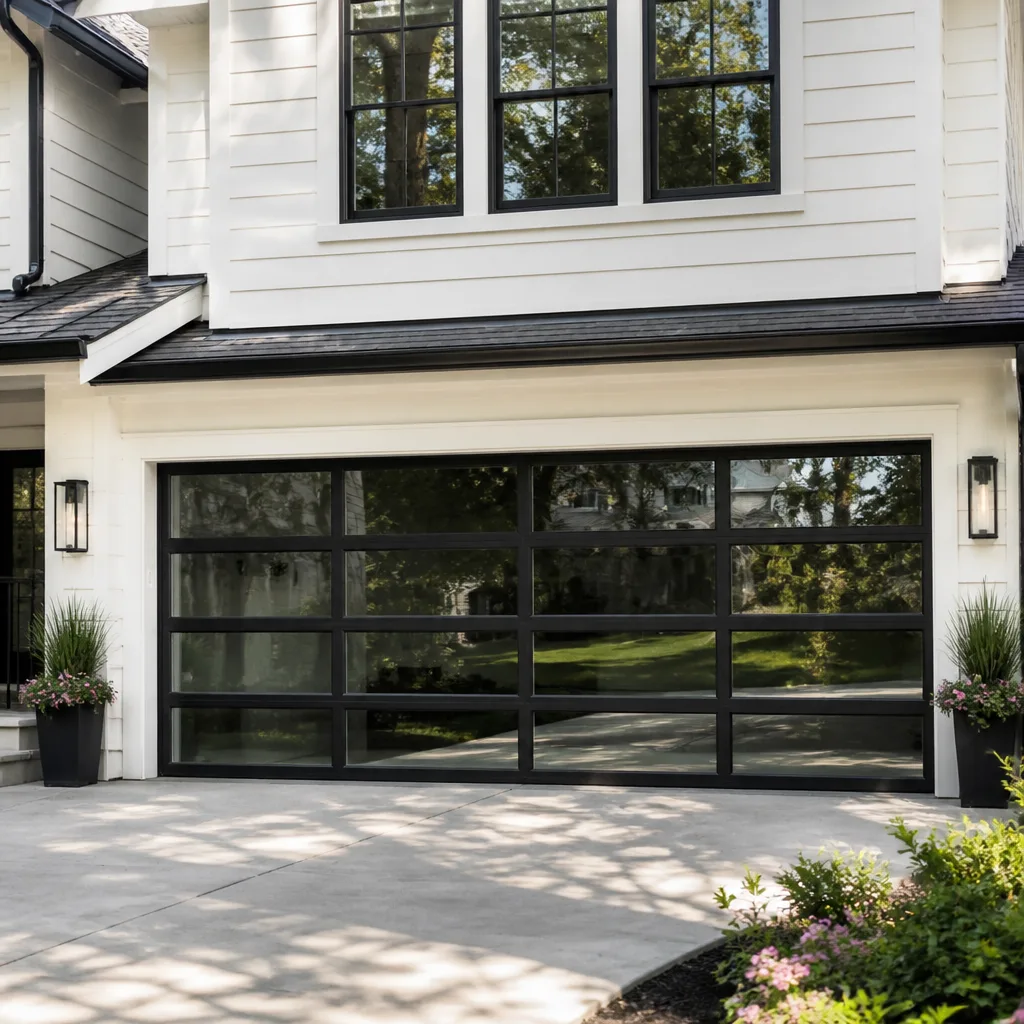 Full-view glass
 LiftMaster openers
 Chamberlain openers
Full 25-point door and opener safety check with every visit - springs, cables, rollers, tracks, and your LiftMaster or Chamberlain opener included
You get a price before we start. It does not change when the pro arrives.
Get your free estimateGarage Door Permits, Codes & Inspections in Syracuse, NY: What You Need to Know
Most homeowners in Syracuse assume a garage door replacement needs a permit. In many cases it doesn’t, and that gap between assumption and reality is where trouble hides. A new door installed without the right paperwork can pass quietly for years until a storm claim or a home sale puts the installation under a microscope. Insurers and buyers can ask whether the work was code-compliant, and if nobody documented it, the answer gets expensive. This guide covers when a permit is actually required in Syracuse, how Onondaga County towns differ, what the New York State Uniform Fire Prevention and Building Code expects of a door replacement, what “like-for-like” really means, and the paperwork worth keeping.
Styles & brands we work with
- Raised-panel steel
- Carriage house
- Modern flush
- Full-view glass
- LiftMaster openers
- Chamberlain openers
Quick Answer
In most cases, replacing a garage door in Syracuse with the same size, same type, and same opening does not require a building permit, but structural changes to the opening or header usually do. Permit rules differ between the City of Syracuse and surrounding Onondaga County municipalities, and all work must meet the New York State Uniform Fire Prevention and Building Code regardless of whether a permit is issued. The safe rule: call the local building department before ordering, and keep the installation documentation for resale and insurance.
Table of Contents
- When is a garage door permit required in Syracuse?
- Safety first: what we won’t walk you through
- City of Syracuse vs. Onondaga County: why the thresholds differ
- How the NYS Uniform Fire Prevention and Building Code applies
- What “like-for-like replacement” means legally
- What a code-compliant installation looks like in practice
- What happens during an inspection
- The documents to keep after any installation
- Why this matters at resale and during an insurance claim
- Common mistakes to avoid
- When to call a professional
- Frequently asked questions
- The bottom line
When is a garage door permit required in Syracuse?
A permit is typically required in the City of Syracuse when a garage door project changes the structure of the opening, the size of the opening, the header above it, or the wall around it. Replacing a door with an identical-size unit in an existing opening is usually treated as a repair or replacement rather than new construction, and no permit is issued for the door itself. The dividing line is whether the work alters the building. A like-for-like swap doesn’t. Enlarging a single-car opening to fit a double door, cutting a new opening in a masonry wall, or reinforcing or replacing a sagging header does.
These are the projects where we tell Syracuse homeowners to expect a permit before the door arrives:
- Widening or heightening an existing garage door opening
- Cutting a brand-new opening into a wall that didn’t have one
- Replacing or modifying the structural header above the opening
- Converting a carport into an enclosed garage with a door
- Converting a garage into living space, or back again
- Any change that affects the structural frame the door hangs from
Those are structural projects, not garage door projects alone. A straight replacement of an existing door in an existing opening, where the new door fits the same dimensions and hangs on the same track arrangement, usually falls outside the permit requirement. The word to use with your building department is “replacement,” not “installation.” It’s the difference between a routine swap and a project that needs review.
Safety first: what we won’t walk you through
Garage door springs, cables, and the torsion assembly under tension are genuinely dangerous. A wound torsion spring can release with enough force to cause serious injury, and the cables under load can snap without warning. We won’t describe how to adjust, wind, or release those components yourself, and no reputable guide should. If your door won’t open, the spring is broken, or you hear a loud snap from the overhead mechanism, stop operating the door and call a trained technician.
The same caution applies to anything electrical. Opener wiring, wall controls, safety sensors, and the high-voltage connection at the ceiling outlet belong to a licensed electrician or an experienced opener technician. In our experience the most common injury in this trade comes from a homeowner trying to save a service call on a torsion spring. The service call is cheaper than the emergency room.
What you can safely do: keep the door area clear, make sure children and pets aren’t underneath a door in motion, and confirm the safety reverse feature works by testing it per the manufacturer’s instructions. Everything else about spring and cable work should go to a professional.
City of Syracuse vs. Onondaga County: why the thresholds differ
Here’s where most online guides fall short. The City of Syracuse and the surrounding Onondaga County towns and villages don’t all write their permit requirements the same way. Each municipality administers its own building department, its own application forms, and its own interpretation of the state code. A project that needs no permit inside the city limits can require one in a neighboring town, and the reverse happens too.
If your home is in Syracuse proper, you’re working with the City of Syracuse’s code enforcement and permitting office. If you’re in a town or village just outside the city, you’re working with that municipality’s building department. The practical differences usually show up in three places:
- What counts as a structural change – some towns treat any change to the opening frame as structural; others don’t
- Whether a like-for-like replacement needs notification – a few municipalities still want a record even when no permit is issued
- Inspection scheduling – some towns inspect all permitted structural work; others inspect only at specific milestones
For any Syracuse homeowner in a surrounding town, the answer is the same: call your own municipality’s building department and ask the question directly. Give them the address, the current door size, the new door size, and whether the opening changes. That’s a two-minute call that prevents weeks of problems. We tell customers the same thing whether they end up hiring us or not, because a door that gets installed without the required paperwork becomes the homeowner’s problem, not the contractor’s.
How the NYS Uniform Fire Prevention and Building Code applies
New York State’s Uniform Fire Prevention and Building Code sets the baseline for how garage doors and the walls around them must be built, and it applies whether or not your municipality issues a permit. Two parts of that code matter most for garage door work: the structural requirements for the header, and the requirements that separate a garage from the living space.
Header and structural requirements. The header is the beam above the garage door opening that carries the load of the wall above it. It has to be sized correctly for the span and the load, and it has to be anchored properly to the framing on either side. When a door is replaced in an existing opening without modifying the header, the existing structure is usually left alone. When the opening changes size, the header has to be reviewed, and that’s when a structural review becomes part of the project.
Wind resistance. Garage doors are large, flat panels exposed to wind load. The rigid code language varies by wind zone and by door size, but the principle is consistent: the door, its tracks, and its anchoring have to be rated for the load the location puts on them. For most homes in Syracuse, a properly rated residential door installed per the manufacturer’s instructions meets the requirement. For a larger door, a door in an exposed location, or an opening in an attached garage where the wall matters structurally, the door and its hardware need to match the load calculation. This is one reason we work with brands like Clopay and Amarr, both of which publish wind-load ratings and installation specifications for their products. The label on the door tells you what it’s designed to do, and that’s exactly what a code reviewer looks for.
Fire separation. Where a garage shares a wall or ceiling with the living space, the code requires a minimum fire separation between the two. That’s a wall and ceiling requirement rather than a door requirement, but garage door installation projects sometimes involve opening walls or adding framing, and any work that touches the separation assembly needs to maintain it. If a project involves a garage-to-house wall, have the wall condition reviewed before the door work begins.
What “like-for-like replacement” means legally
“Like-for-like” gets thrown around loosely, so here’s the specific definition to use. A like-for-like replacement means the new door is installed in the same opening, at the same size and location, in the same wall assembly, with no change to the framing, header, or surrounding structure, and no change in the door’s function (for example, switching from a manually operated door to an automatic one in a location where that changes the opening’s structural requirements). It’s a swap, not a modification.
The exemption applies in most cases where those conditions hold. It stops applying the moment any of the following is true:
- The opening size changes in either dimension (width or height)
- The door’s location on the wall moves
- The header is modified, reinforced, or replaced
- The wall around the opening is opened, reframed, or altered
- A new opening is being created where none existed
- The door’s design load changes enough to require different structural anchoring
- The garage is being converted or enclosed in a way that touches the fire separation
If none of those conditions apply, you’re most likely in like-for-like territory and don’t need a permit. If any one of them applies, treat it as a permitted project until your building department tells you otherwise. We always ask Syracuse customers about the existing opening dimensions and any planned structural work before we quote a job, because it determines both the permit question and the labor estimate.
What a code-compliant installation looks like in practice
You don’t need to read the code to spot a compliant installation. You need to know what to look at. Here’s what a properly installed door looks like in Syracuse after the technicians pack up, and what we check on any installation we’re called back to review.
- Door and hardware matched to the opening. The door size matches the opening, and the tracks and brackets are installed per the manufacturer’s layout. No shimming or packing at the brackets to make a slightly wrong size fit.
- The door is level and square in the opening. Look at the gap between the door and the opening on each side. It should be consistent. A door that’s out of square puts uneven load on the springs and the opener.
- The opener is mounted to structure, not to a ceiling panel alone. The rail and motor have to be anchored to framing that will hold them under constant load, not to drywall alone.
- The safety reverse system is installed and working. The safety sensors near the floor have to be present, aligned, and wired correctly. The opener has to reverse the door on contact.
- The springs are the correct type for the door weight. Torsion or extension, matched to the door’s weight rating. A mismatched spring fails early and warns you with rough operation first.
- The door operates smoothly through a full cycle. No drag, no binding, no scrape at the top of the opening. It closes fully without a gap and opens without hesitation.
- The installation paperwork matches what’s on the door. The manufacturer’s install instructions and the wind-load label match the door that was actually installed.
Those seven items are also exactly what an inspector or a claim adjuster looks at. A door that passes them is doing what the code cares about, whether or not a permit was ever issued.
What happens during an inspection
When a permit is required, most Syracuse-area municipalities inspect the structural work at specific milestones rather than at the end. For a garage door project, the usual sequence looks like this:
- Rough framing inspection – the header and framing are visible before the wall is closed up, and the inspector verifies the structural work
- Door installation – the door and hardware are installed per the permit
- Final inspection – the door is operated, the safety systems are checked, and the finished work is confirmed
- Closeout – the permit is signed off and the municipality records the completion
The final inspection is where homeowners sometimes get surprised. An inspector will operate the door and check that the spring and opener work together, that the safety reverse works, and that the door closes fully. If the opener was installed but the safety sensors weren’t, or the springs are undersized, the final inspection fails and the project goes back to the installer. We see this most often when a door was installed quickly without the manufacturer’s paperwork being followed. A brand-familiar installer, whether the door is Genie, Chamberlain, Clopay, Amarr, or any of the other brands we work with, has the manufacturer’s install spec on hand and gets it right the first time.
If your municipality requires an inspection, don’t close up the wall or paint over the work until the final is signed off. A failed inspection after the wall is finished means opening it up again.
The documents to keep after any installation
Here’s the part almost no one explains to homeowners: keep the paperwork. Even when no permit is required, the documentation of the installation is what protects you at resale and during a claim. If you replace your garage door in Syracuse, file these four items somewhere you’ll find them years later:
- Door and opener model numbers – the specific model of door and opener that went in, written on the invoice and matching the labels on the door and the opener motor
- The manufacturer’s installation instructions – the printed or downloaded booklet that came with the door, especially if it carries the wind-load rating or installation specifications
- The installation invoice – the contractor’s invoice with the date, the door model, the opener model, and a description of the work performed
- The permit and inspection record – if a permit was issued, keep the permit number and the inspection sign-off; if no permit was required, keep a note saying so, with the name of the building department that confirmed it
Also photograph the installed door and opener, including the labels on the door. A date-stamped photo of the label costs nothing and settles arguments about which model went in. We send installation records to customers as standard practice; if you hired someone else and never received the paperwork, request it now. It’s a lot easier to get it from the contractor while the job is fresh than years later.
Why this matters at resale and during an insurance claim
When you sell a home in Syracuse, a buyer’s inspector will look at the garage door. If the door was installed as like-for-like and no permit was required, the sale proceeds normally. If the door involved structural changes and no permit was ever pulled, the buyer’s inspector can flag it, and the sale can stall while the paperwork is resolved. That’s a problem most homeowners never think about at the time of installation.
Insurance claims are the other place it matters. A storm damages a garage door, the homeowner files a claim, and the adjuster checks how the door was installed. If the installation wasn’t code-compliant, the insurer can deny or reduce the payout. That’s a risk almost no contractor mentions at the point of sale. We’re not an insurance company and can’t speak to every policy, but we can say this: a compliant installation, documented properly, is the cleanest claim defense a homeowner has. When we work with your insurer, we want the record to show a door that was installed per spec with the paperwork to prove it.
What the adjuster wants to see is exactly the four documents above. Model numbers, install instructions, invoice, and permit record where applicable. If you have those, the claim goes smoothly. If you don’t, the adjuster has to take the installation on faith, and that’s where reductions happen.
Common Mistakes to Avoid
- Assuming a permit is always needed (or never is). Both are wrong. The question is whether the work changes the opening, the header, or the wall around it. Ask the building department before ordering a door.
- Using the word “install” when you mean “replace.” When you call your building department, describe the project as a like-for-like replacement of an existing door in the same opening. The word “install” can trigger a permit process that doesn’t apply.
- Not checking your specific municipality. Syracuse and its surrounding Onondaga County towns don’t all apply the same thresholds. A neighbor’s experience in a different town tells you nothing about your own.
- Letting the wall get closed up before the final inspection. If a permit was required, don’t finish the wall until the sign-off happens. A failed final inspection after drywall and paint is a costly do-over.
- Throwing out the manufacturer’s install booklet. That booklet is the wind-load rating and the install spec rolled into one. Keep it. The label on the door is a snapshot; the booklet is the record.
- Skipping the photo of the door label. A dated photo of the model label costs nothing and settles resale and claim questions years later.
- Comparing your project to a guide that ignores the city-county difference. Most online guides describe a generic city. If your home is in Syracuse, verify with Syracuse’s building department, not a blog from out of state.
When to Call a Professional
The permit questions you can answer yourself with a phone call to your building department. The installation work is a different matter. Call a professional when the door won’t open or close smoothly, when the spring has broken or the door sounds rough through its cycle, when the opener runs but the door doesn’t move, or when you’re replacing a door and want the install done to the manufacturer’s spec the first time. Spring and cable work in particular should never go to a homeowner.
Southgate Garage Door Service offers free estimates in Syracuse – call (855) 360-7984. We work on what you already have, whether it’s a broken spring or a full new door, and we’re factory-familiar with the brands most homes in the area already run, including LiftMaster, Chamberlain, Genie, Clopay, Amarr, Wayne Dalton, Craftsman, and Raynor. Our technicians have up to 10 years of experience. We answer 24/7. Fast dispatch from 7am to 7pm, Sunday through Friday. When we quote a project, the price is set per job by the written estimate and agreed before any work starts, so you’re never surprised by the invoice.
Frequently Asked Questions
In most cases, no. A like-for-like replacement of an existing door in the same opening, with no change to the header, opening size, or surrounding wall, typically doesn’t require a permit in the City of Syracuse. If your project involves widening the opening, replacing the header, or creating a new opening, expect a permit. Confirm with the City of Syracuse building department before ordering. Then call (855) 360-7984 for a free estimate on the installation – estimates are free.
A like-for-like replacement means the new door goes into the same opening, at the same size, in the same wall, with no structural change to the header, frame, or surrounding wall. It’s a swap of one door for another of matching dimensions and function. If the opening changes size, moves, or gets reframed, it isn’t like-for-like anymore, and the permit question changes. Call (855) 360-7984 for a free estimate on the installation – estimates are free.
Yes, it does. Each municipality in Onondaga County runs its own building department with its own application forms and its own interpretation of the state code, so the thresholds for what requires a permit can differ from one town to the next. A project that needs no permit inside the city limits might need one in a surrounding village. Always confirm with your own municipality. Call (855) 360-7984 for a free estimate on the installation – estimates are free.
Keep the door and opener model numbers, the manufacturer’s installation instructions, the contractor’s invoice, and any permit and inspection record, plus a dated photo of the door label. Those four items protect you at resale and during a storm insurance claim. Without them, an adjuster has to take the installation on faith, and that’s where claim payouts get reduced. Call (855) 360-7984 for a free estimate on the installation – estimates are free.
A compliant installation has the door and hardware matched to the opening, the door level and square, the opener anchored to structural framing, working safety sensors, springs rated for the door weight, and smooth operation through a full cycle. The door should close without a gap and open without hesitation. Those are the same things an inspector or claim adjuster looks at. Call (855) 360-7984 for a free estimate on the installation – estimates are free.
Usually yes, if the work was genuinely like-for-like and no permit was required in your municipality. The protection comes from documenting both facts: that the work was a replacement, and that no permit was required. Keep the model numbers, install booklet, invoice, and a note on the permit question. If the project involved structural changes, the missing permit can stall a sale. Call (855) 360-7984 for a free estimate on the installation – estimates are free.
The Bottom Line
Permit rules for garage door work in Syracuse aren’t complicated once you separate the two categories. A like-for-like replacement usually needs no permit. A structural change to the opening, header, or surrounding wall usually does. The NYS Uniform Fire Prevention and Building Code sets the baseline either way, which is why a compliant installation matters even when no inspector ever sees it. The City of Syracuse and the surrounding Onondaga County towns apply their own thresholds, so call your building department before ordering a door. Then keep the paperwork: model numbers, install instructions, invoice, and permit record if any. Those four documents protect you at resale and during a storm claim. For the installation itself, whether it’s a broken spring or a full new door, we work on what you already have. Call (855) 360-7984 for a free estimate. We answer 24/7. Fast dispatch from 7am to 7pm, Sunday through Friday.
Written by the team at Southgate Garage Door Service.
See the difference
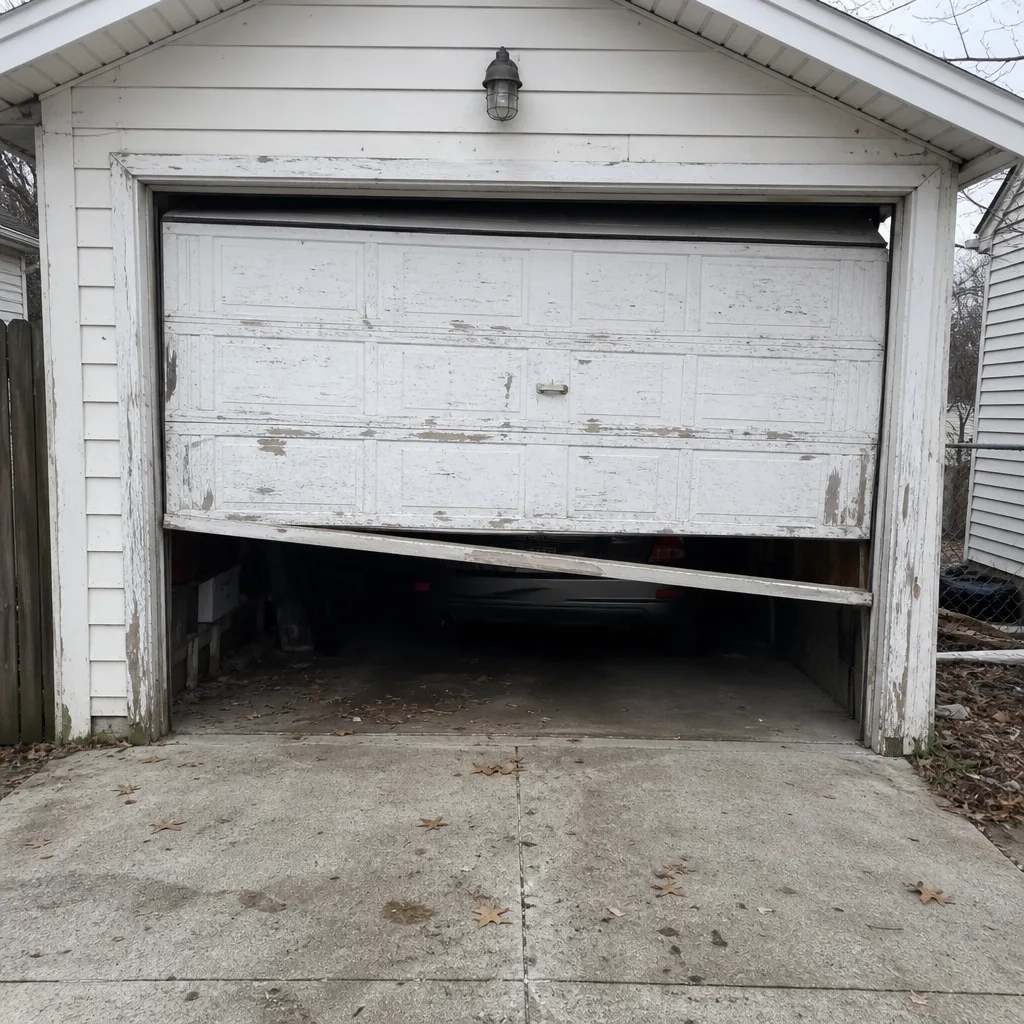 Before
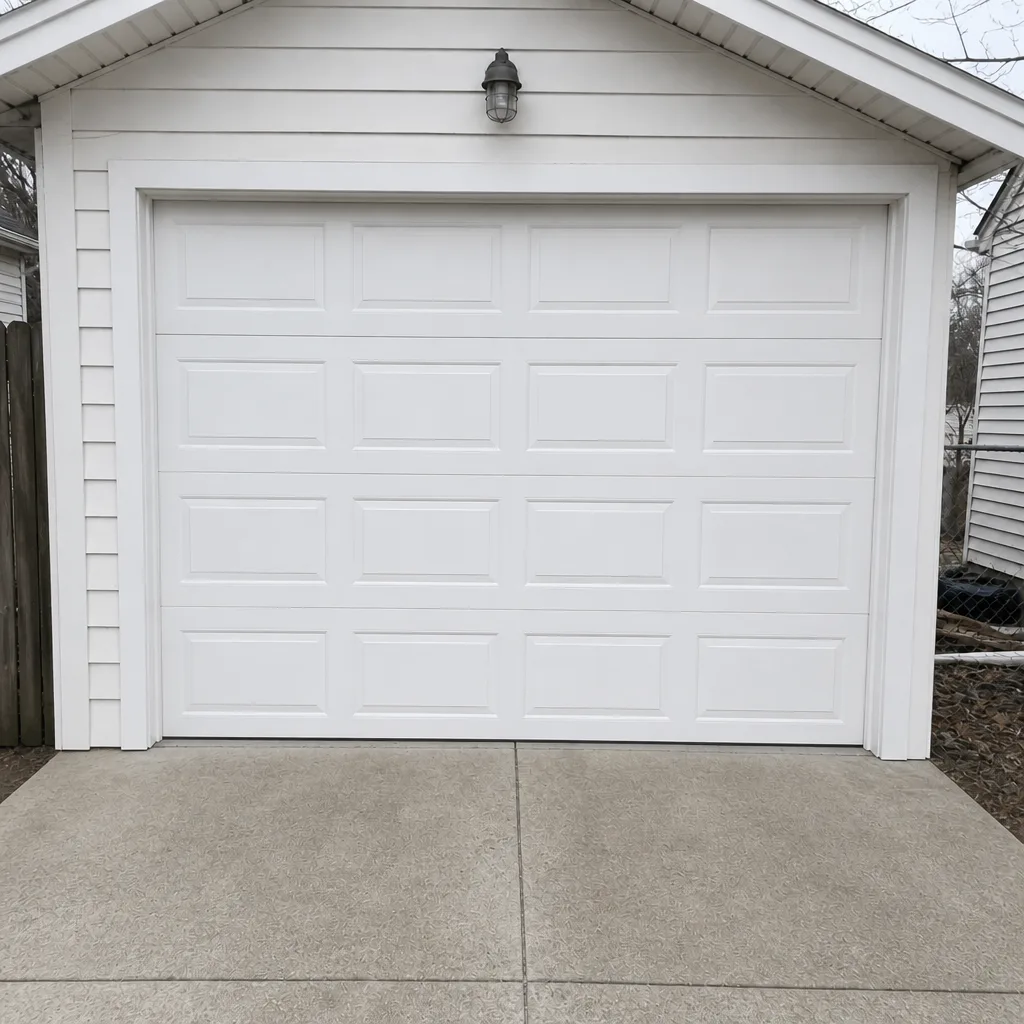 After
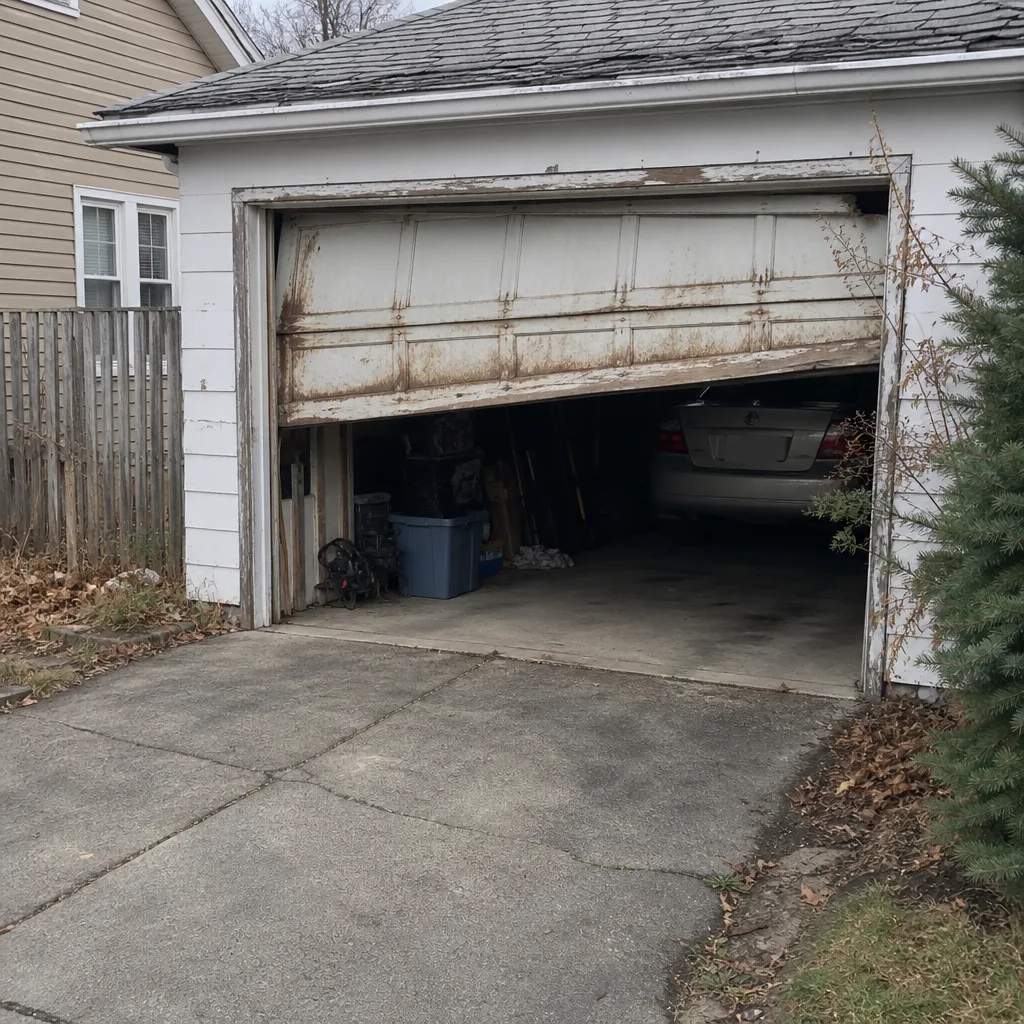 Before
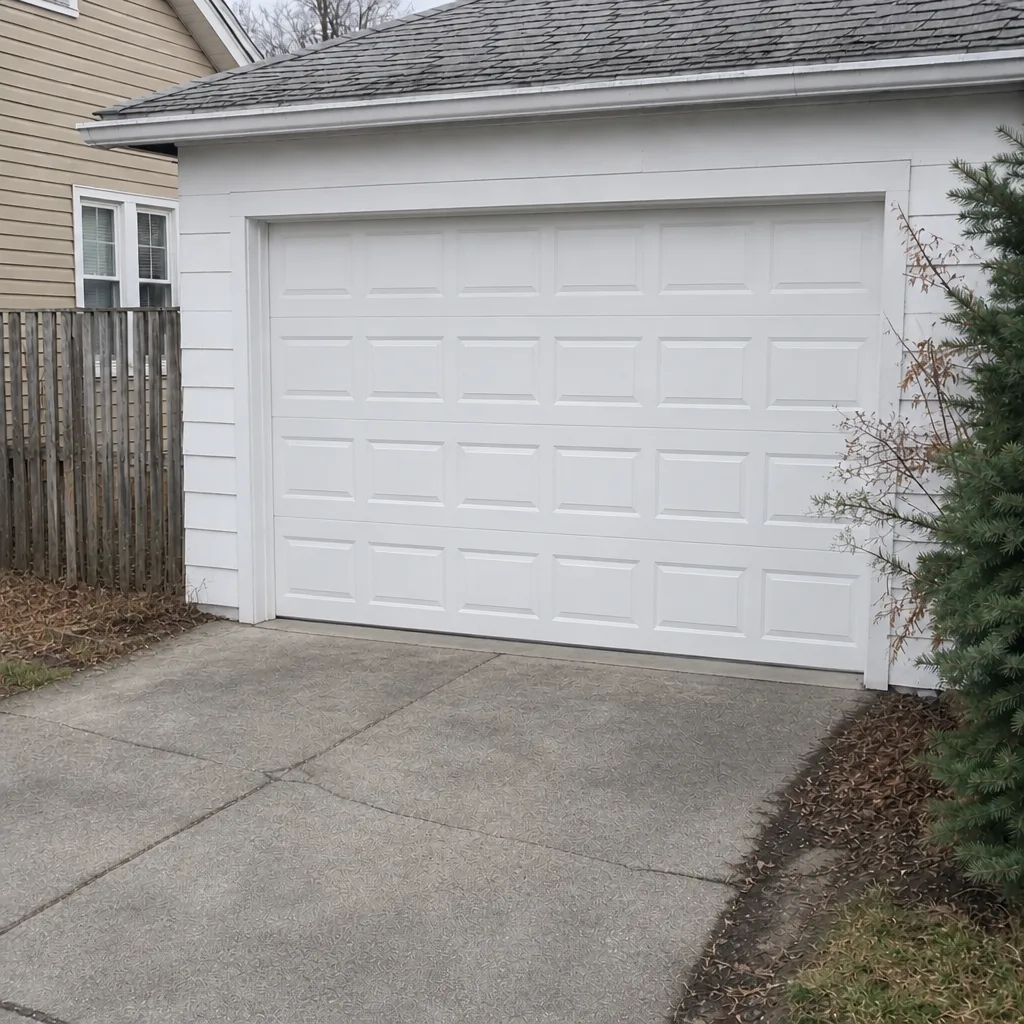 After
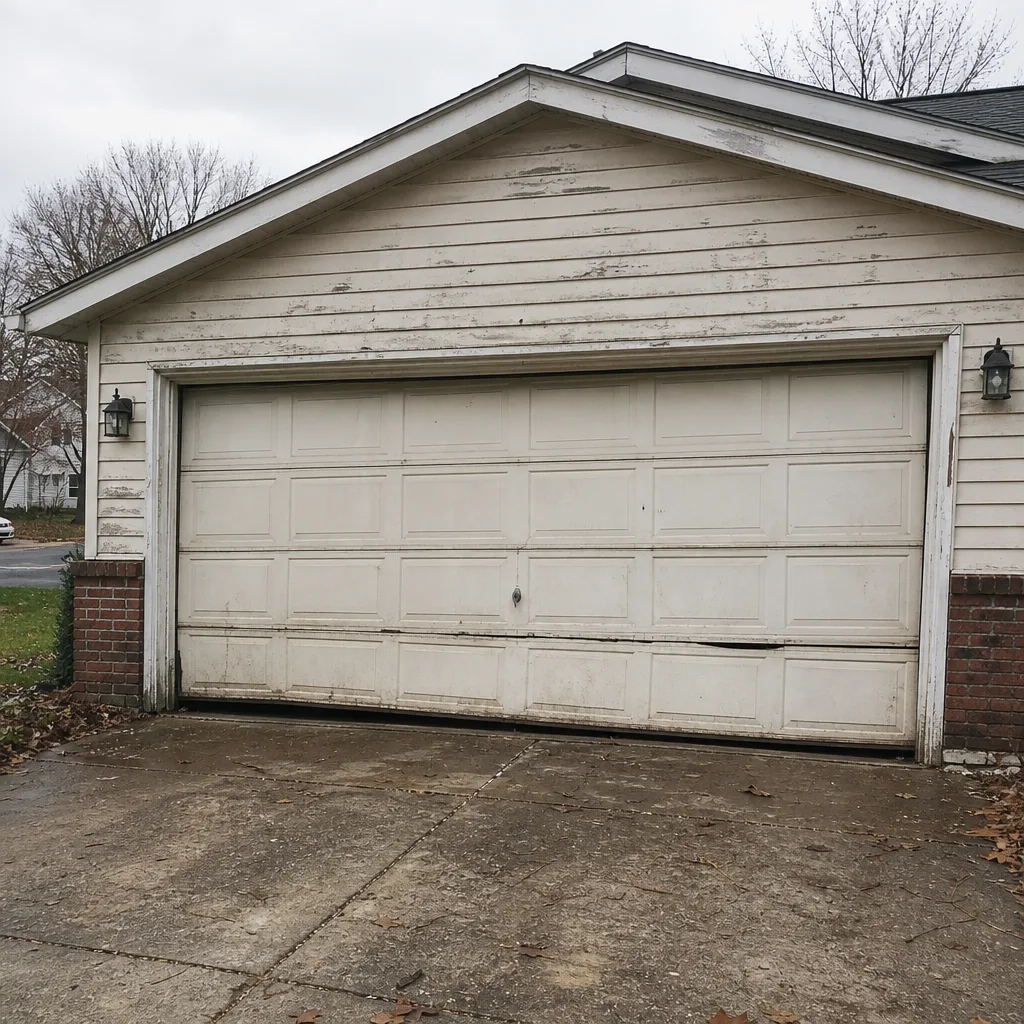 Before
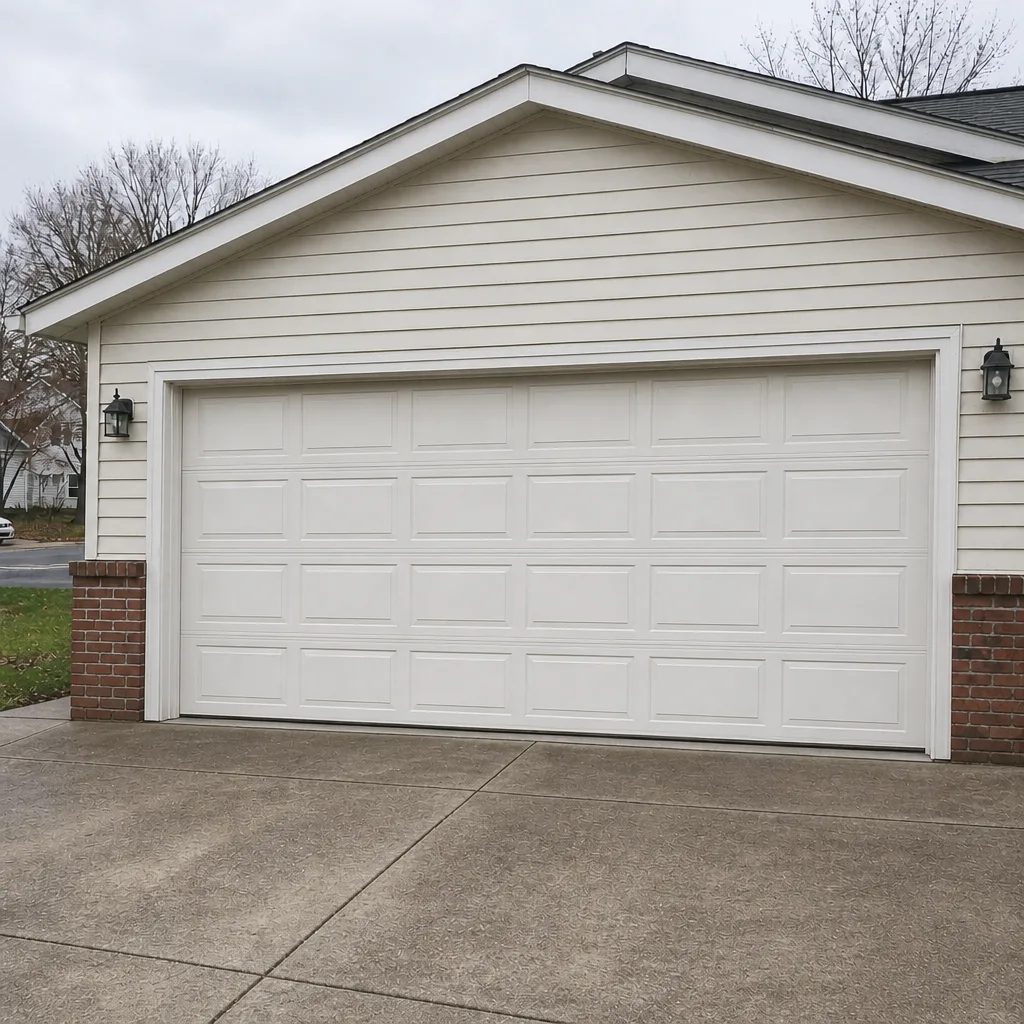 After