
Last updated November 15, 2026
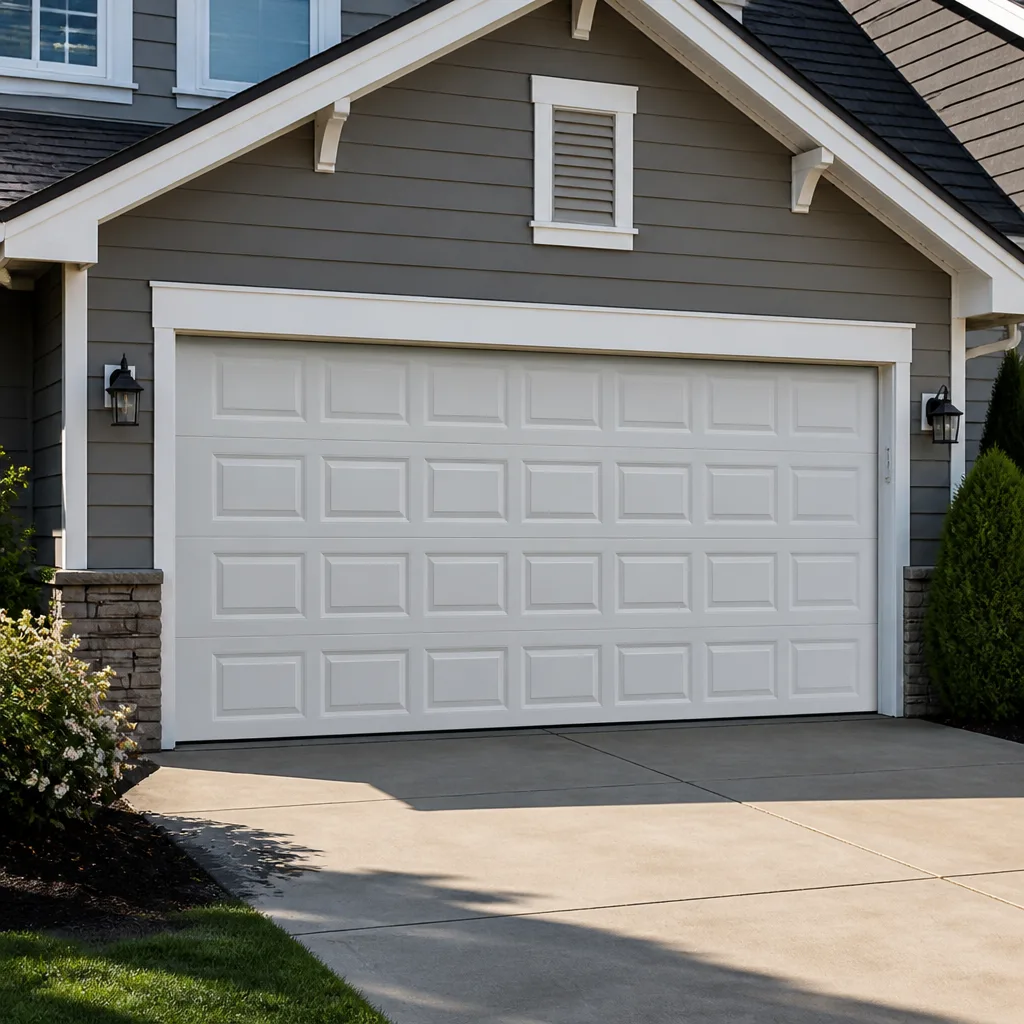 Raised-panel steel
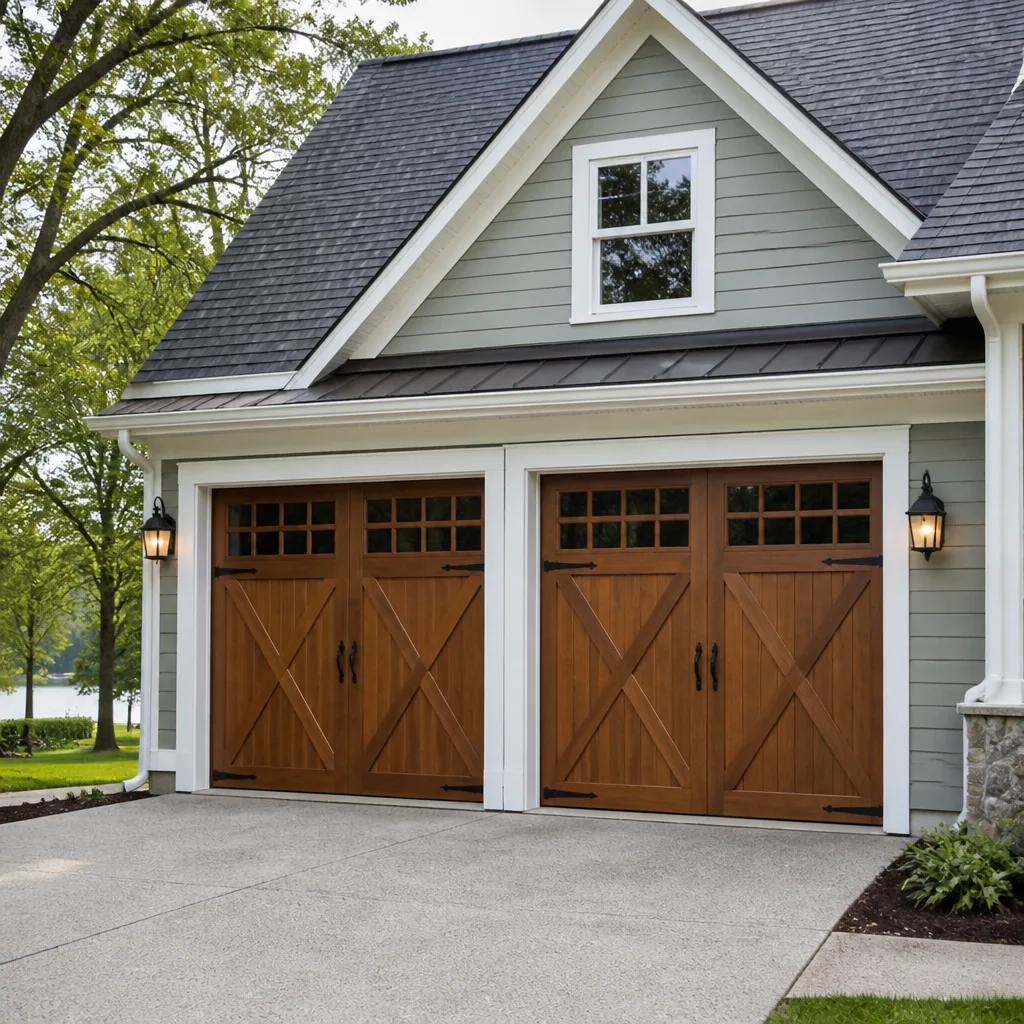 Carriage house
 Modern flush
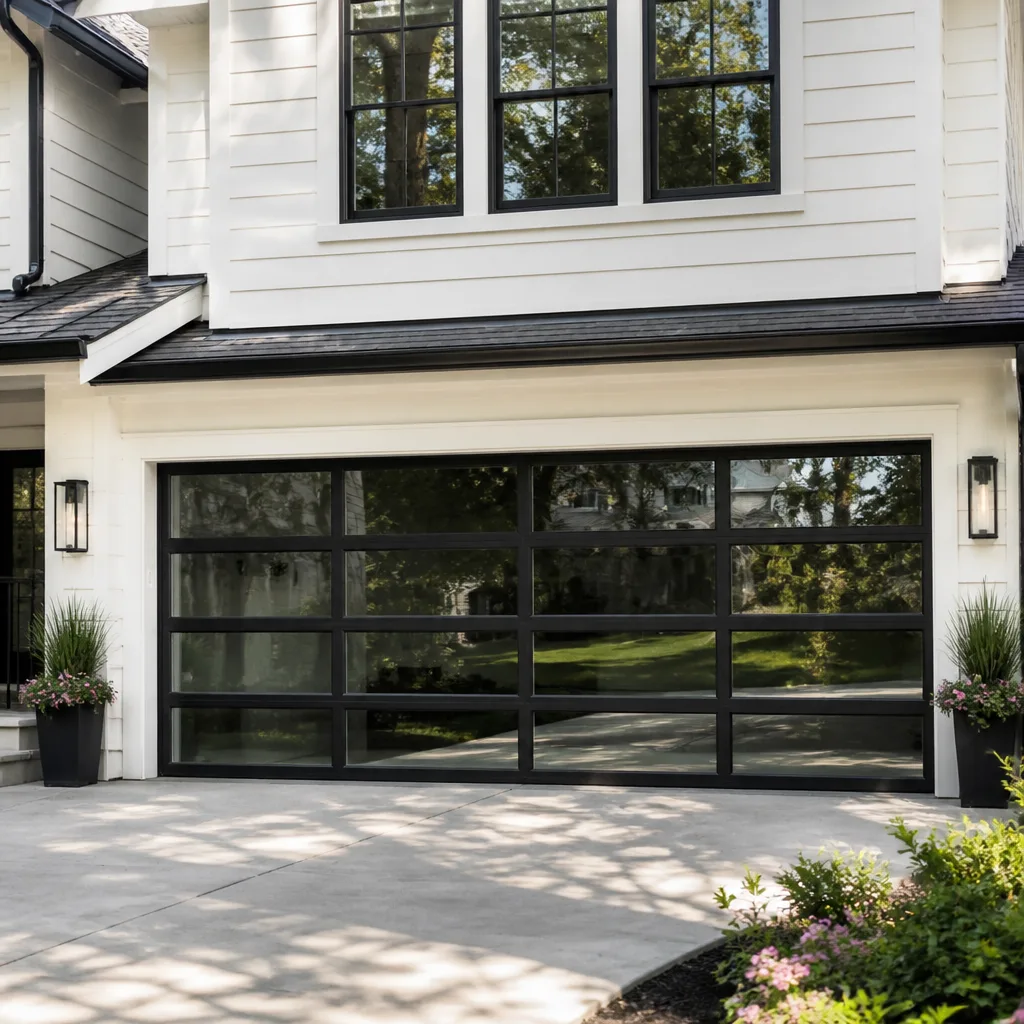 Full-view glass
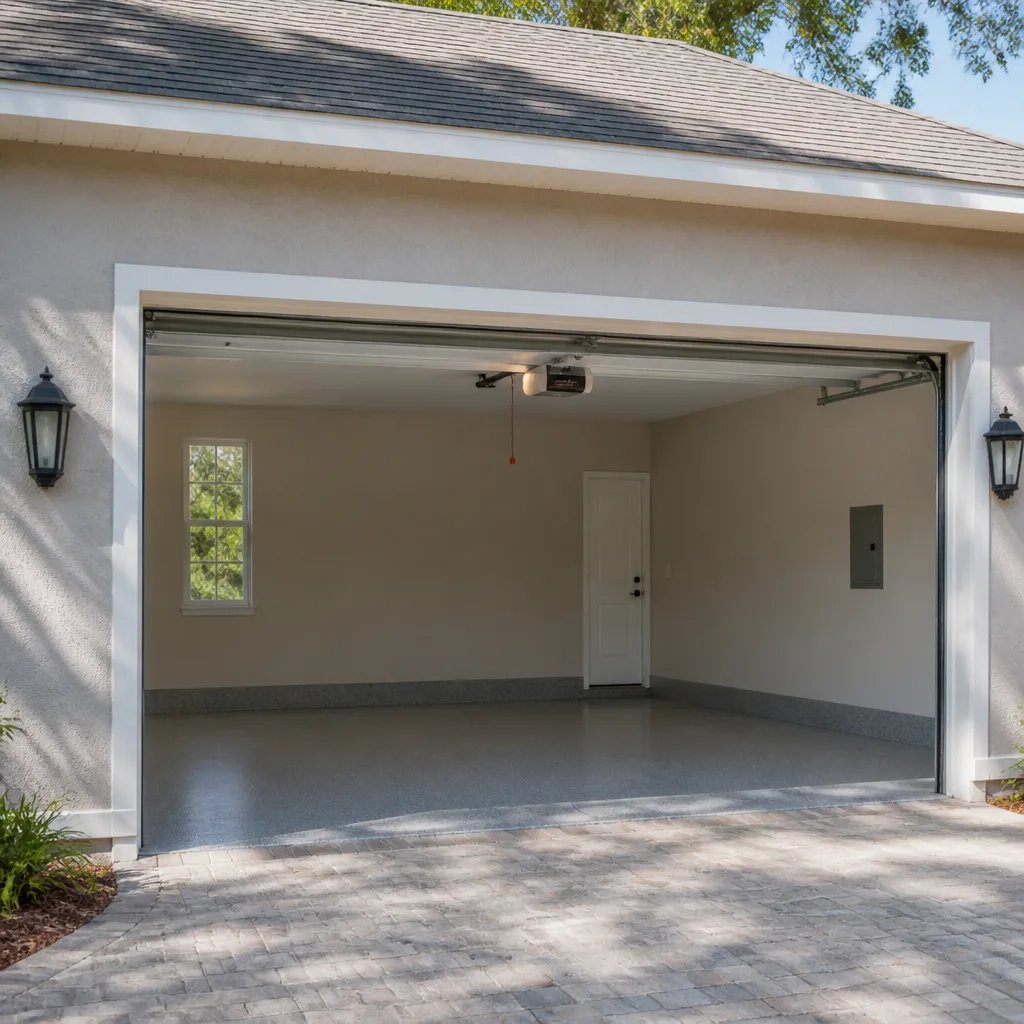 LiftMaster openers
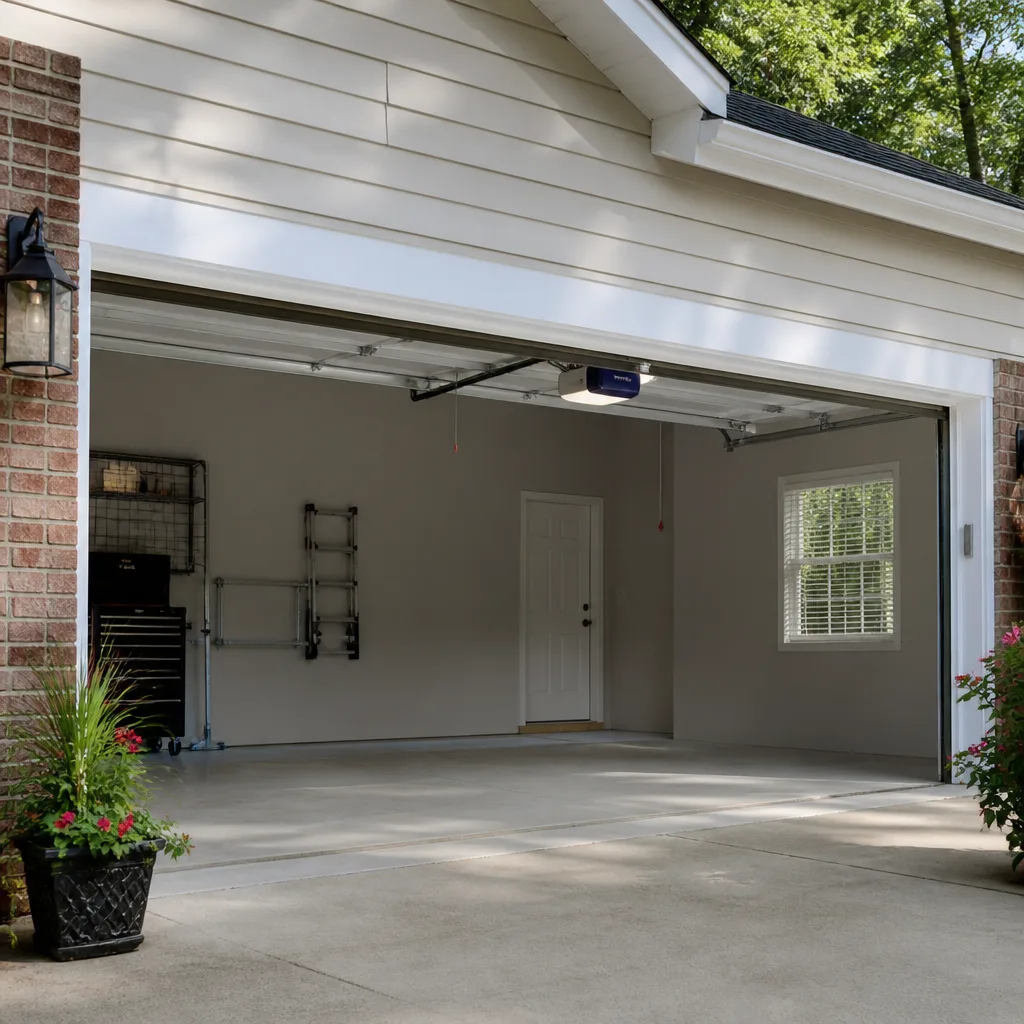 Chamberlain openers
Full 25-point door and opener safety check with every visit - springs, cables, rollers, tracks, and your LiftMaster or Chamberlain opener included
You get a price before we start. It does not change when the pro arrives.
Get your free estimateDIY vs Professional Garage Door: The Syracuse Homeowner’s Decision Guide
Every garage door guide says the same thing about torsion springs: they’re dangerous, leave them alone. Then it moves on, and the homeowner who’s genuinely handy is left wondering which parts of their door are actually off-limits and which ones they’ve been scared away from for no good reason. That’s the wrong framing. The real question isn’t whether you’re skilled enough to touch a garage door. It’s which specific tasks carry physical risk or quietly void a manufacturer warranty, and which ones are genuinely homeowner-appropriate once you understand how the system works. This guide sorts garage door work into three honest categories for Syracuse homeowners: safe to DIY, DIY with caution, and professional-only. You’ll learn where the fine print lives on warranties, what a failed DIY repair really costs beyond the parts, and how to decide when a call beats a trip to the hardware store.
Quick Answer
For most Syracuse homeowners, routine upkeep like lubrication, weather seal replacement, and visual inspections are safe to handle yourself. Anything involving torsion springs, cables, or the counterbalance system is professional-only because those parts store enough energy to cause serious injury when released improperly, and there’s no amount of homeowner experience that makes that risk acceptable. Opener diagnostics, track realignment after an impact, and panel replacement fall in the middle: reasonable to attempt with research, but often cheaper and safer to hand off.
Styles & brands we work with
- Raised-panel steel
- Carriage house
- Modern flush
- Full-view glass
- LiftMaster openers
- Chamberlain openers
Table of Contents
- The Three Categories of Garage Door Work
- Safe to DIY: What You Can Genuinely Handle
- DIY With Caution: Tasks That Reward Research
- Professional-Only: The Spring and Cable Reality
- Which DIY Repairs Void Your Warranty
- The Real Cost of a Failed DIY Repair
- When a Specialist Beats Buying Parts
- Syracuse Conditions That Change the Calculus
The Three Categories of Garage Door Work
Garage door systems break down into three zones, and the dividing lines are physical, not skill-based. Understand where those lines sit and you stop guessing about every repair that comes up.
Category 1: Safe to DIY. Maintenance items that involve no stored energy and no precision adjustment. Lubrication, seal replacement, tightening visible fasteners, cleaning and painting. If a task can be done with the door closed and the power disconnected, and nothing is under tension, it usually belongs here.
Category 2: DIY with caution. Work that requires understanding how the system operates before you start. Opener troubleshooting, photo-eye realignment, roller replacement, track adjustment, and hardware tightening. Nothing is exploding, but mistakes snowball. A misaligned track can wear rollers prematurely. A wrong opener adjustment can damage the logic board.
Category 3: Professional-only. Anything touching torsion springs, extension springs, the lift cables, or the bottom bracket. These parts hold the entire weight of the door in tension. Releasing that tension incorrectly injures experienced technicians, and it will injure a homeowner with no warning and no second chance.
A good test: if the repair requires you to disconnect the door from the opener or release spring tension to do the work, it’s Category 3. If you can complete the job with the door connected, powered down, and at rest, it’s Category 1 or 2.
Safe to DIY: What You Can Genuinely Handle
Plenty of garage door upkeep is homeowner work, and doing it yourself saves real money without any risk beyond a scraped knuckle. The key is staying inside the boundary: no tension, no opener disassembly, no adjustment of anything you can’t see moving when you test it.
Here’s what belongs in the safe category:
- Lubrication. Springs, hinges, rollers, and the opener rail benefit from a proper garage door lubricant (not WD-40) a few times a year. It quiets the door and slows wear.
- Weather seal replacement. The rubber strip along the bottom of the door ages, hardens, and stops sealing. Replacement is a homeowner job with basic tools.
- Tightening visible fasteners. Hinges and brackets loosen over time. Snug them with a socket wrench, but don’t overtighten.
- Cleaning and painting steel doors. Wash, sand light rust, and repaint. This matters more in upstate New York than most places.
- Visual inspection. Walk the door through a full cycle and listen. Look for frayed cables, worn rollers, bent hinges, or sagging panels. You’re not fixing anything here, just catching problems early.
- Photo-eye cleaning. If the opener won’t close, wipe off the two small lenses near the floor before assuming anything is broken.
- Battery replacement in remotes and keypads. Listen for the click, replace the battery, done.
Lubrication is the highest-value item on that list. A door that runs smoothly, without grinding or squealing, wears out far slower than one running dry. Ten minutes with the right lubricant a few times a year buys years on rollers and hinges, and it’s caught problems before they turn into repairs. In our experience at Southgate Garage Door Service, the smoothest-running doors we see are the ones homeowners have been lubricating on a schedule.
DIY With Caution: Tasks That Reward Research
This middle tier is where homeowners get stuck. The work isn’t physically dangerous if the door is disconnected and at rest, but it’s fiddly, and the consequences of getting it wrong aren’t always obvious. Proceed if you’re willing to read the repair manual for your specific opener and watch a couple of full repair videos before starting.
Belongs in this category:
- Opener troubleshooting. If the door won’t respond, verify the remote, wall switch, and breaker before assuming the opener is dead. Half of “dead opener” calls are a tripped GFCI outlet or a failed remote battery.
- Photo-eye alignment. Lenses get bumped. Loosen the mount, aim the two eyes at each other, confirm the indicator light stops blinking. If the light stays solid, the eyes are working but something else is wrong.
- Roller replacement. Door down, no tension on the rollers, swap in new nylon rollers one at a time. Straightforward. The trick is buying the right shaft size.
- Track adjustment after a minor bump. A gentle tap can nudge a top bracket. Adjusting the vertical track is a homeowner job if the door is disconnected. Horizontal track and anything that requires loosening the track-to-frame mounting is not.
- Limit and force adjustment on older openers. If your opener has physical adjustment screws for travel limits and force, a careful adjustment following the manual is reasonable. On modern openers that auto-calibrate on setup, don’t guess at settings.
- Cosmetic panel replacement. If a steel panel is dented or lightly rusted and the section is removable without disturbing the hinge plates at the corners, swap it. Once the hinge plate carries a roller, the trickier it gets.
The pattern: if the work touches the opener’s circuit logic or the door’s alignment, proceed slowly. If it touches the springs, cables, or bottom bracket, stop and call someone. And if your door has a smart-home opener – we work on LiftMaster and Chamberlain units regularly – there’s one extra step in the manual: reconnect to Wi-Fi and recalibrate after any adjustment, or the app reports the door as open when it isn’t.
Professional-Only: The Spring and Cable Reality
Torsion springs are the part every guide warns about, but the warning usually gets no context. Here’s the context. A standard torsion spring on a two-car door is wound tight enough that, if it releases while a person is working near it, the energy behaves like a sudden impact of around 200 pounds. That’s not a number thrown at you to scare you into calling a pro. It’s the reason the trade treats spring work differently from every other garage door task, including the ones that are genuinely fixable by a careful homeowner.
What makes it professional-only:
- The spring holds the door’s weight. The opener only lifts; springs balance. Take the spring off a door under load and the entire door can drop.
- Winding bars require specific technique. Setting a spring involves winding it to a precise number of turns based on door height and spring size. Too few turns and the door won’t lift. Too many and the spring fails early or, worse, breaks free while you’re winding it.
- Cables work with the spring. A cable that slips out of the drum while under tension will whip. This is the reason professional technicians wear appropriate gloves and stand clear during the reset.
- The bottom bracket is the highest-risk part. It holds the cable and is under spring tension even when the door is down. Never loosen the bottom bracket. Ever.
- Extension springs need safety containment. If your door uses extension springs rather than torsion springs, the springs should already have a containment cable running through them. If they don’t, that’s a professional fix, not a homeowner one.
Spring work isn’t about whether you can turn a wrench. It’s about whether the wrong move can hurt you or someone in your household. In our experience, homeowners who’ve watched a technician set a torsion spring realize quickly that there’s no safe way to learn this on your own door. Schedule garage door repair rather than attempt it yourself.
A word on cables, too: a frayed cable is not “just a frayed cable.” It’s a cable waiting to snap, and when it does, the door drops on one side and can damage panels, bend the track, or hit whatever’s underneath. If you see fraying, don’t run the door again until a professional has looked at it.
Which DIY Repairs Void Your Warranty
This is the section most homeowners skip and later regret. Manufacturer warranties on garage doors and openers are voided by specific actions, and most of those actions look reasonable to a homeowner with tools and good intentions. Read the fine print before you pick up the wrench.
On the door itself, warranties are commonly voided by:
- Painting a wood door with a non-recommended finish, or painting over a factory finish without proper prep. Some manufacturers specify the paint system, and getting it wrong voids the finish warranty.
- Replacing panels with non-matching manufacturer parts. If you swap in a generic panel, you break the door’s warranty coverage on that section and often on the operating system as a whole.
- Any modification to the door’s structural frame or to the spring system outside of an authorized repair. This is where DIY spring work really costs you: not just the injury risk, but the loss of coverage on a door you just bought.
- Failing to follow the annual maintenance the manual specifies. Some warranties require documented maintenance. If you’re not lubricating, you’re not maintaining.
On the opener, warranties are commonly voided by:
- Opening the motor housing to adjust internal components.
- Using non-approved remotes or wall controls.
- Failing to have the opener installed by a qualified technician for brands that require it for warranty coverage.
- Modifying or bypassing the safety reverse system. This one also creates a serious safety problem, not just a warranty one.
The practical reading: maintenance keeps your warranty alive, and unauthorized repair kills it. That’s true whether you own a Clopay door, a Genie opener, or anything else in the trade. If you’re within the warranty window and considering anything beyond lubrication and seal replacement, call first and ask what a DIY repair would do to your coverage. A five-minute conversation protects a several-thousand-dollar purchase.
The Real Cost of a Failed DIY Repair
Homeowners usually weigh a DIY repair against the price of a pro service call. The honest calculation is wider than that, because a failed DIY attempt adds costs that don’t show up on the original quote.
What actually happens when a DIY repair goes sideways:
- Parts get damaged beyond the original fault. A botched track adjustment bends the horizontal track. A wrong roller swap wears the hinge plate. Those parts don’t get refunded.
- Diagnostic time grows. A technician repairing a door that’s been partially disassembled by a homeowner spends time figuring out what changed, not just what broke. That diagnostic time shows up on the bill.
- The original problem persists. Half of failed DIY repairs don’t solve the fault at all – they add a second one on top. The door still doesn’t close right, and now there’s an opener that doesn’t reverse properly either.
- Warranty coverage may already be gone. If you’ve already done the unauthorized repair, the manufacturer may decline the warranty claim before the technician arrives.
- Safety systems can end up compromised. A homeowner-adjusting force settings can leave a door that closes on a child or a pet without reversing. Fixing that safely is not optional and not cheap.
The math flips fastest on unfamiliar equipment. If you own a Raynor door with a LiftMaster opener and you’ve never touched either, the “I’ll try it myself” path is the most expensive of all – you’re learning both systems from scratch under pressure. garage door opener repair from a specialist who’s seen that system before takes minutes to diagnose what a homeowner takes a weekend to misdiagnose.
Where DIY genuinely wins on cost: lubrication, seal replacement, remote batteries, cosmetic panel swaps. Where it loses money: springs, cables, opener internals, track realignment after a hard hit, and anything on an unfamiliar brand.
When a Specialist Beats Buying Parts
Here’s a decision rule that saves money more often than it costs it: if the door has one problem and you can fix it with a part you already know how to install, DIY. If the door has one problem that requires diagnosing an unfamiliar system, buy the call rather than the part.
The reasoning:
- You can’t buy the right part until you know the actual fault. A door that reverses immediately on close isn’t always a photo-eye problem. A door that runs rough isn’t always a roller problem. Buying parts before diagnosing them is how homeowners end up with a shelf full of spares and a door that still doesn’t work.
- Brand-specific parts are easy to buy wrong. A Chamberlain opener’s logic board, a Genie opener’s gear assembly, a Clopay door’s panel – the part number depends on the model, and manufacturers change models quietly. A specialist diagnoses the model on site and orders the right part.
- Installation risk sits with the specialist. If something goes wrong with a pro-installed part, the fix is our problem. If it goes wrong with a self-installed part, it’s yours.
- Some fixes reveal bigger problems. Replacing a worn roller is fine, but a specialist sees the hinge wear and catches the sagging panel before it becomes a whole-door problem.
This is where the multi-brand service model pays off for the homeowner. We work on LiftMaster, Chamberlain, Genie, Clopay, Amarr, Wayne Dalton, Craftsman, and Raynor systems because those are the brands actually installed in most homes. We don’t push one line over another because we aren’t tied to a single manufacturer’s sales pitch. The recommendation follows the door: if a repair is cost-effective, we repair. If a new door delivers better long-term value, we install one. Most brands, diagnosed right the first time, is worth more than any coupon on a part.
Syracuse Conditions That Change the Calculus
Garage doors in Syracuse live a harder life than doors in milder climates, and that changes the DIY calculation in a few specific ways. Our winters run long and cold, our lake-effect snow loads the door from the outside, and our road-salt spray carries into the garage on wet vehicles. Those conditions wear different parts at different rates than what a national garage door guide assumes.
What Syracuse owners should know:
- Cold weather makes springs more brittle. Torsion springs fail more often at the coldest temperatures of the year than in summer. This doesn’t make DIY spring work safer in July – the risk stays constant – but it’s the reason spring repairs cluster around the coldest part of the year.
- Winter is when the safety reverse matters most. A door that doesn’t reverse on an obstruction is a year-round hazard, but with children and pets moving through the garage more in snowy months, the margin for error drops. Test the reverse monthly, especially through winter.
- Weather seals age faster here. The rubber along the bottom and the brush seals along the sides see more freeze-thaw cycles than in milder places, so they should be checked in fall. Replacement is a homeowner job and worth doing.
- Salt spray on wet vehicles accelerates rust on steel panels. Where a car pulls in wet and salty through a typical Syracuse winter, the door’s lower panels warrant a visual inspection and a coat of touch-up paint before rust sets in for good.
- Lake-effect snow loads weigh on the door. If your driveway accumulates drifts against the door, that pressure can flex the bottom panel and eventually knock the track out of alignment. Clear snow away from the door regularly.
- Older housing stock means older openers. Plenty of Syracuse housing was built in eras when openers were simpler, which is why the trade sees a lot of legacy Craftsman and older Genie and LiftMaster systems still in operation. Those units are serviceable, but they’re often one part failure from being worth replacing entirely.
The Syracuse climate doesn’t create new categories of garage door work, but it shifts them. Winter magnifies spring failures, seal wear, and track misalignment. Summer is the better season for door maintenance tasks that require careful visual inspection. If you’re on the fence between a DIY fix and a call, let the season tip you: if the door fails during the coldest stretch, the answer is always the call.
Common Mistakes to Avoid
- Loosening the bottom bracket to “check the cable.” The bottom bracket is under spring tension even with the door down. Never loosen it. Not even a quarter turn to inspect.
- Buying the wrong spring size to save a call. Springs are matched to door weight and height, and they’re usually replaced in pairs. Buying one spring that’s a size off will wear both springs out faster and put the door out of balance.
- Adjusting the force setting to “fix” a door that binds. A door binding usually has a track or roller fault. Increasing force on the opener hides the fault and stresses the motor until it fails.
- Painting a door without checking the factory finish. Some finishes are paint-ready. Others aren’t. Getting the primer wrong is the single fastest way to void a steel door warranty.
- Ignoring a frayed cable “just a little longer.” Cables fail suddenly, and a snapped cable drops the door on one side, bending panels and track. Don’t run the door until a professional has looked at it.
- Skipping fall lubrication. Syracuse winter is hard on hinges and rollers, and dry metal wears fast in the cold. A fall lubrication pass buys years out of the moving parts.
- Assuming the opener is broken when the door is the problem. Many “dead opener” calls are actually a door in bad balance, a photo-eye issue, or a track problem. Diagnose before you replace.
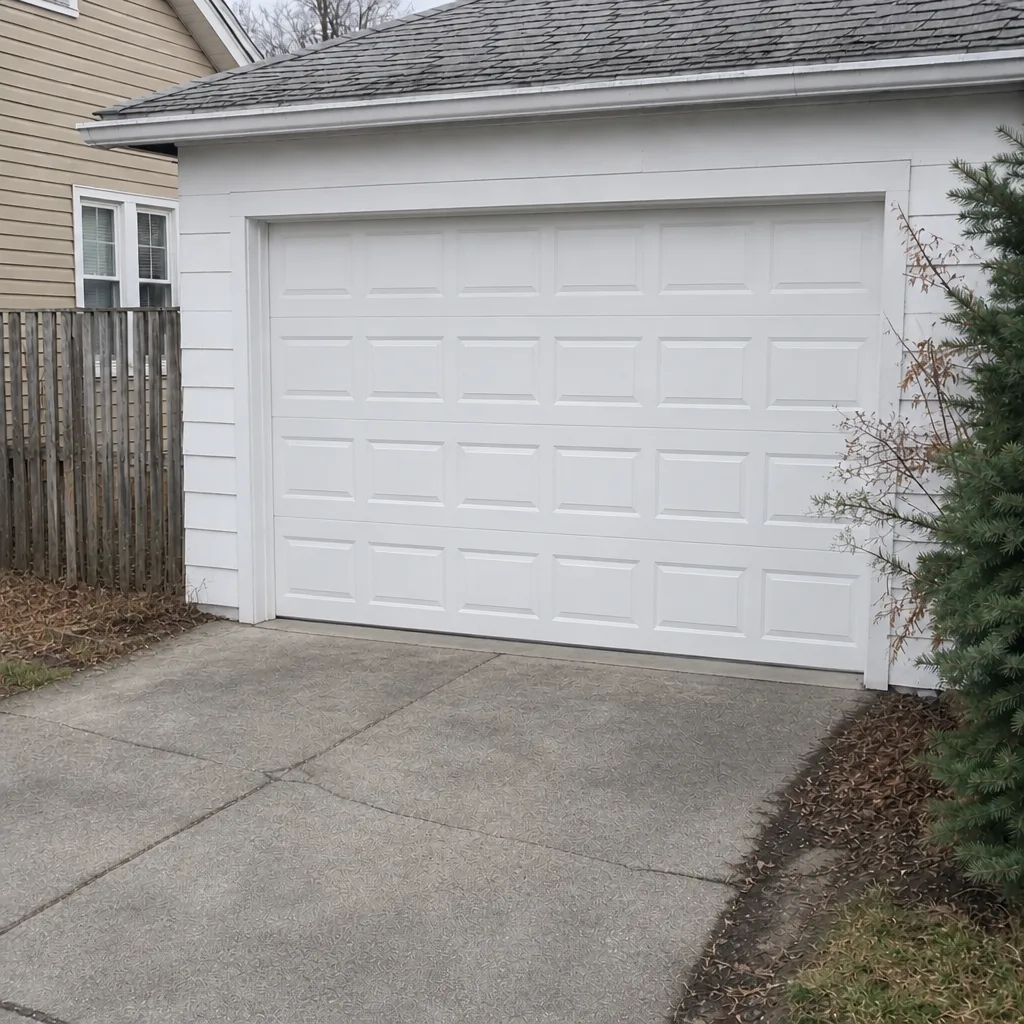
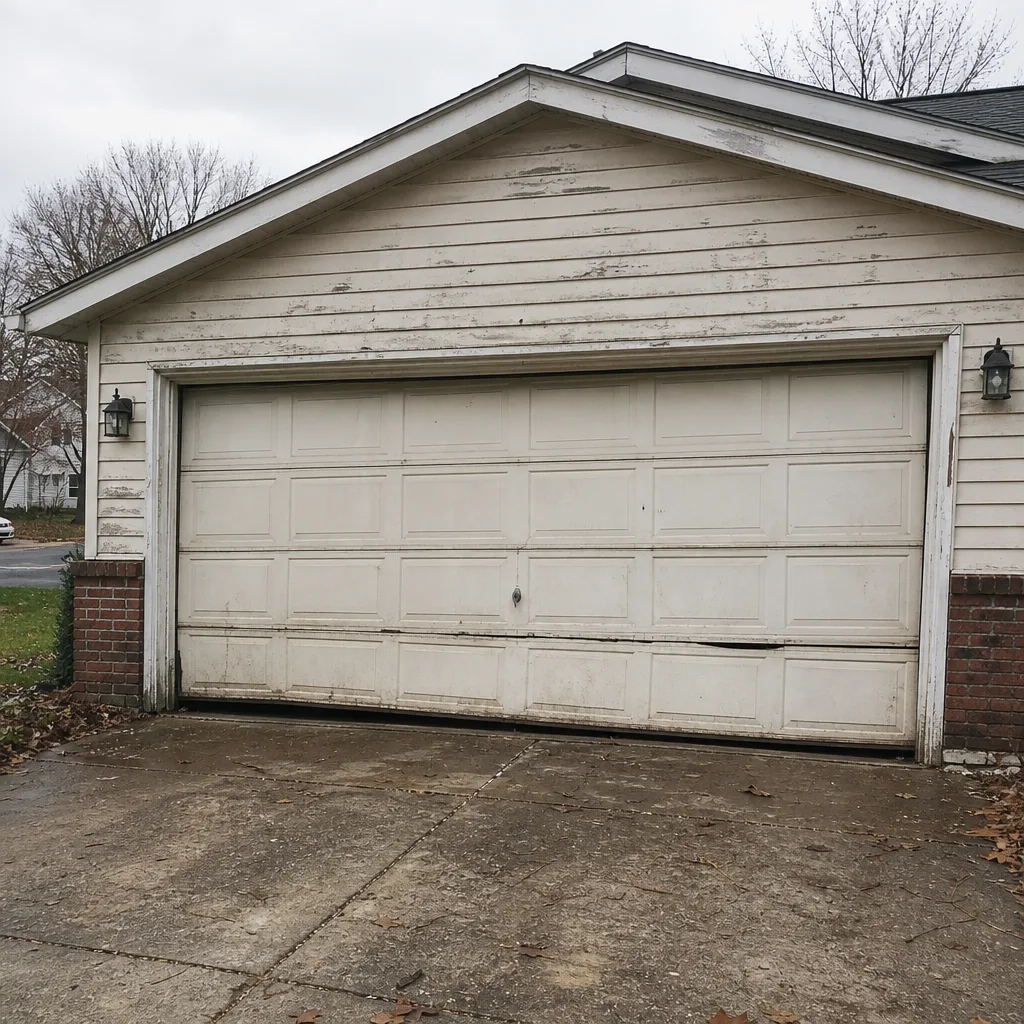
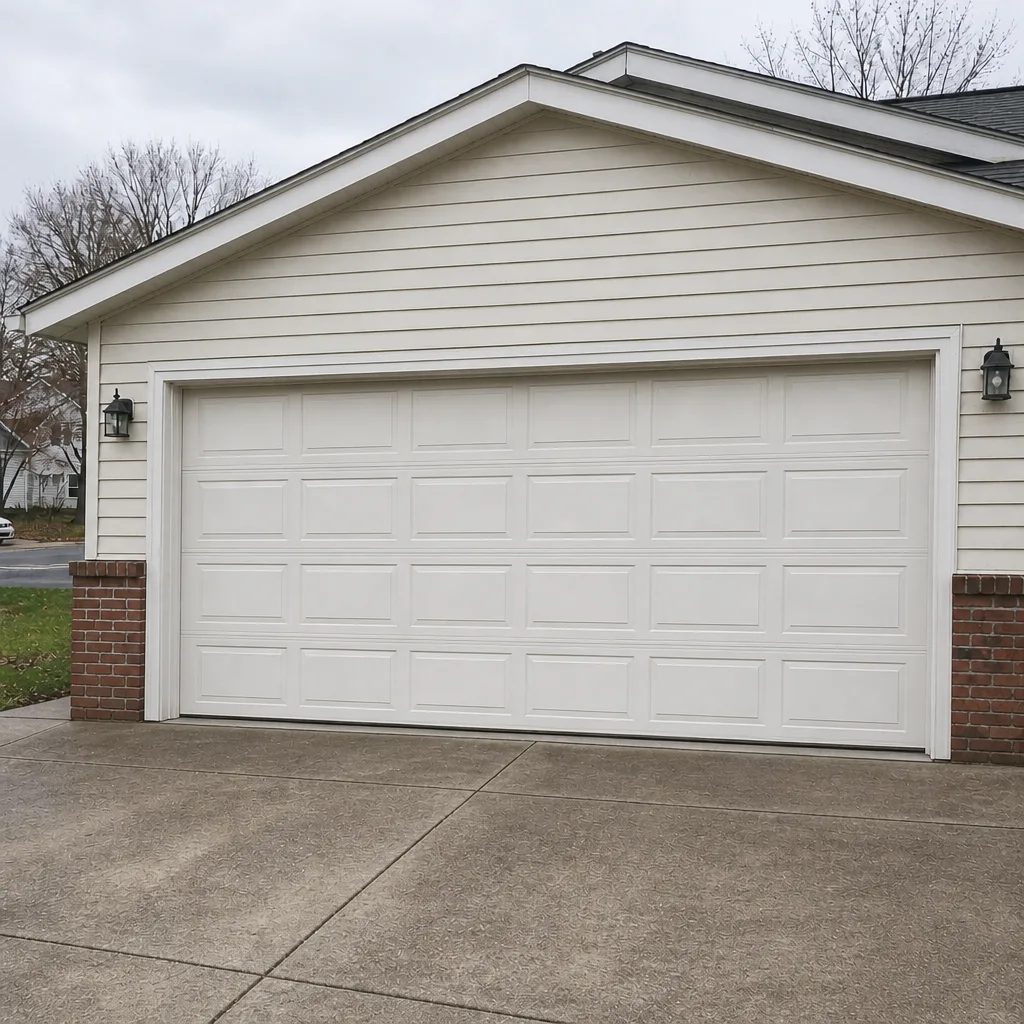
See the difference
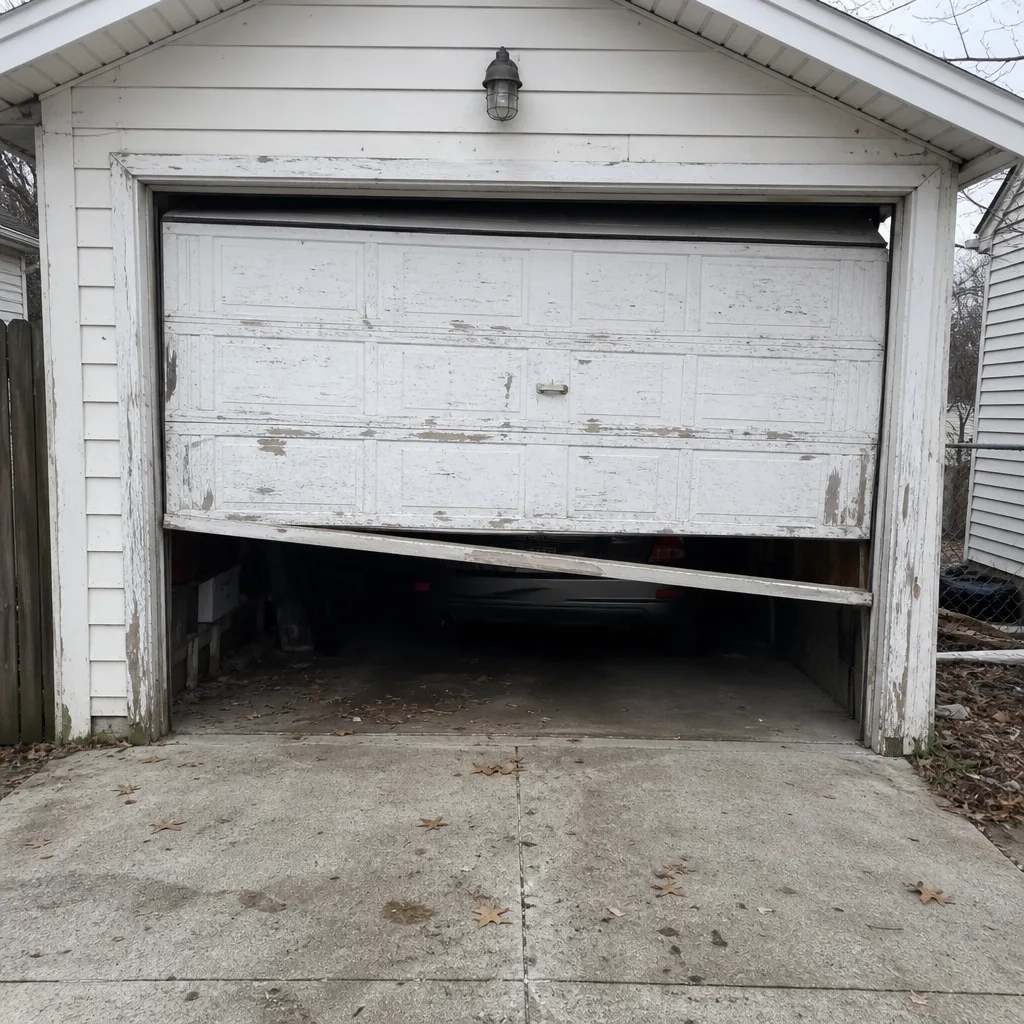 Before
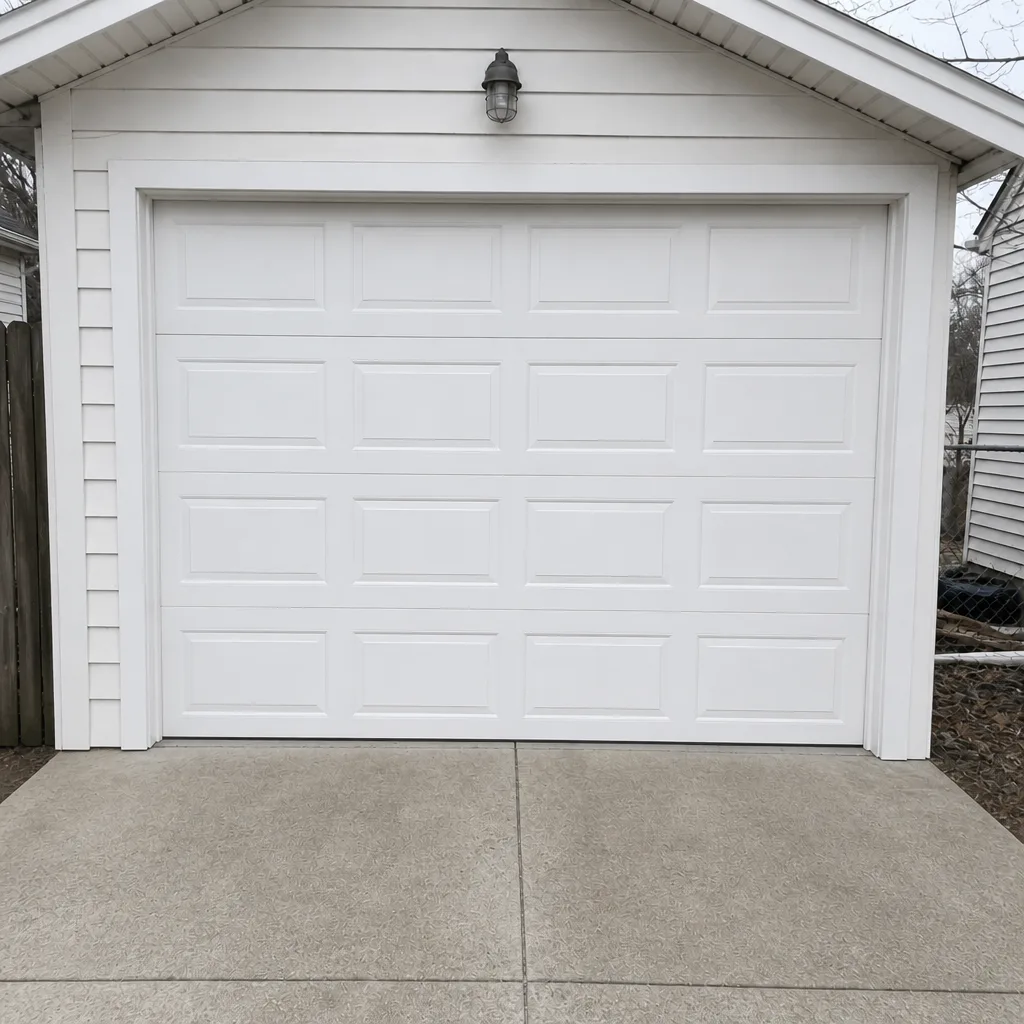 After
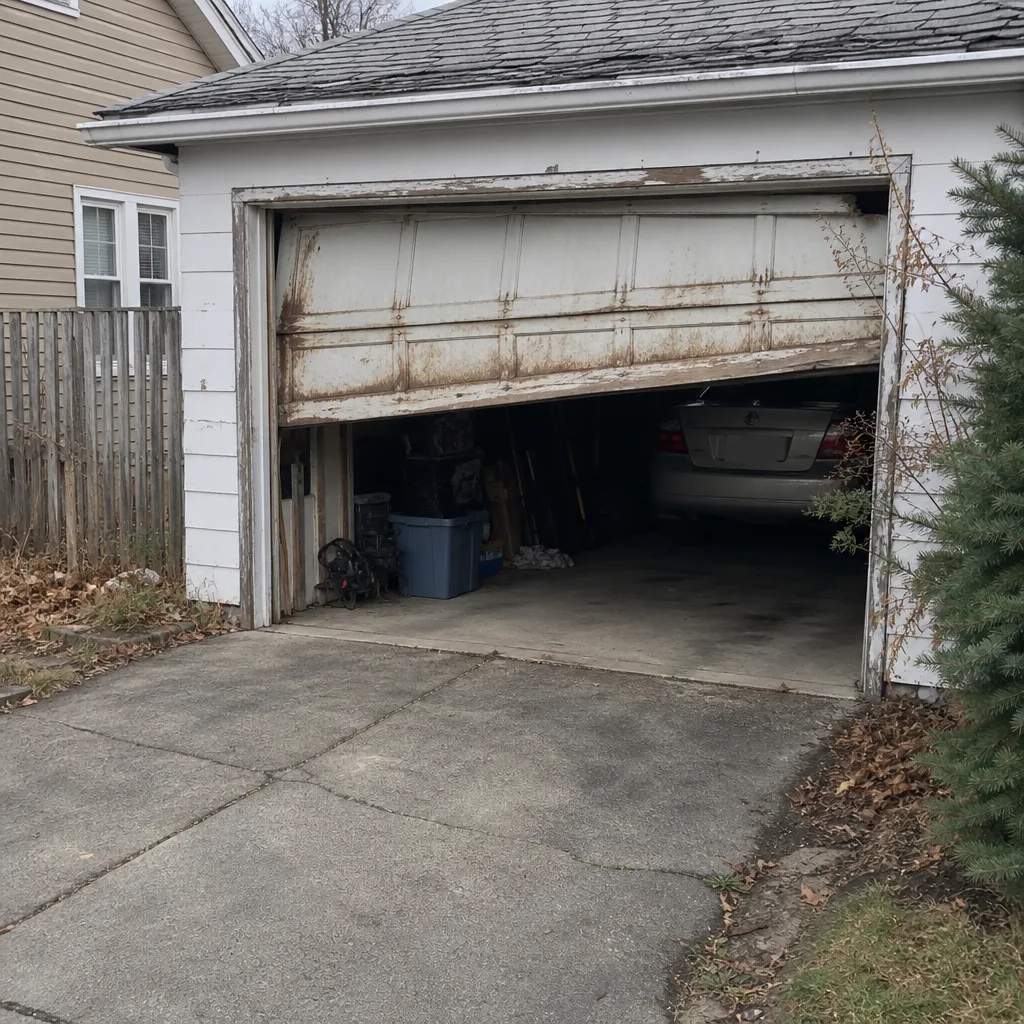 Before
 After
 Before
 After
When to Call a Professional
Call a professional if any of these are true: the door won’t close without force, a spring is visibly broken or looks stretched, a cable is frayed or loose, the bottom bracket has moved, the door is out of balance when run by hand, or the opener is on a brand you’ve never worked on before. Also call if the door has hit something hard, if the track is bent, or if the safety reverse has failed its monthly test. Same-day service applies on urgent repairs; installation work is measured and scheduled. Southgate Garage Door Service offers free estimates in Syracuse and works on the eight brands most commonly installed in homes here. Call (855) 360-7984. We answer 24/7, with fast dispatch from 7am to 7pm, Sunday through Friday.
Frequently Asked Questions
No. Torsion and extension springs are under extreme tension, and the energy released when one fails improperly can cause serious injury or worse. There’s no safe way to learn this on your own door, regardless of how handy you are. Call a professional for spring work every time. Call (855) 360-7984 for a free estimate.
DIY-safe work involves no stored energy – lubrication, seal replacement, tightening fasteners, visual inspection, and opener remote batteries all qualify. Professional-only work involves the counterbalance system: torsion springs, extension springs, lift cables, and the bottom bracket. Those parts hold the door’s weight in tension and are hazardous to touch without training and proper tools. Everything else sits in the middle: cautious-possible but worth weighing against a call.
Often, yes. Manufacturer warranties typically void on unauthorized spring work, non-matching panel replacement, painting over a factory finish incorrectly, and opening an opener’s motor housing. Maintenance keeps a warranty alive; unauthorized repairs end it. Read the manual for your specific door and opener before attempting anything beyond routine upkeep, or call us and ask before you start.
It depends on the repair. Lubrication, seal replacement, and remote batteries are always cheaper done yourself. Springs, cables, opener diagnostics, and track realignment after an impact are usually cheaper with a professional once you count the cost of buying the wrong parts, the diagnostic time a tech spends undoing a partial repair, and any warranty coverage lost to a DIY attempt. For a specific repair, call for a free estimate and compare the numbers honestly. Call (855) 360-7984.
Most spring failures announce themselves: a loud bang from the garage, a door that won’t lift, or a door that lifts a few inches and stops. With the door closed and the opener disconnected, the door should feel balanced halfway up – around waist height. If it won’t stay put and drops or rises on its own, the spring is not doing its job. Don’t run the door again until a technician has looked at it. Call (855) 360-7984 and we’ll get a professional out to see it.
In most cases, yes. We service LiftMaster, Chamberlain, Genie, Clopay, Amarr, Wayne Dalton, Craftsman, and Raynor systems – which covers the brands most commonly installed in Syracuse homes. If you’re unsure what brand you have, that’s fine: we diagnose the model on site. Call (855) 360-7984 for a free estimate.
The Bottom Line
The DIY vs. professional decision on a Syracuse garage door isn’t about how handy you are. It’s about which parts store energy and which don’t. Lubrication, seals, fasteners, remotes, and visual inspections are yours to handle, and doing them well keeps your door running longer and your warranty intact. Springs, cables, the bottom bracket, and opener internals belong to a professional – not because you’re incapable, but because the risk math doesn’t work out in your favor. Everything in the middle is a judgment call, and the smart move is to price the call before you price the part. When the door needs real attention, the right fix comes before the easiest upsell. Whether it’s a broken spring or a full new door, we work on what you already have.
Southgate Garage Door Service is here for the repairs you shouldn’t do yourself, the openers that need a specialist’s eye, and the installations that make more sense than another round of fixes. Call (855) 360-7984 for a free estimate. We answer 24/7, with fast dispatch from 7am to 7pm, Sunday through Friday.
Written by the team at Southgate Garage Door Service.