
Last updated November 15, 2026
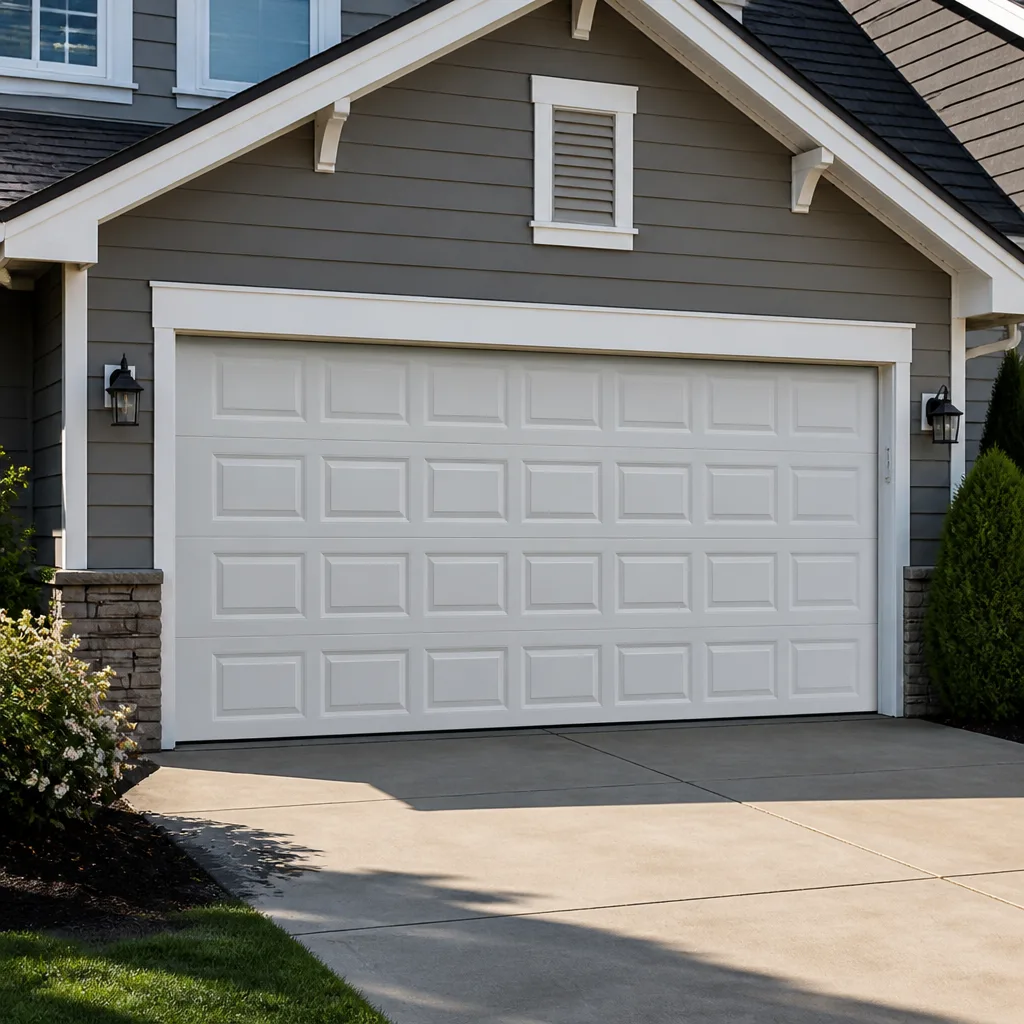 Raised-panel steel
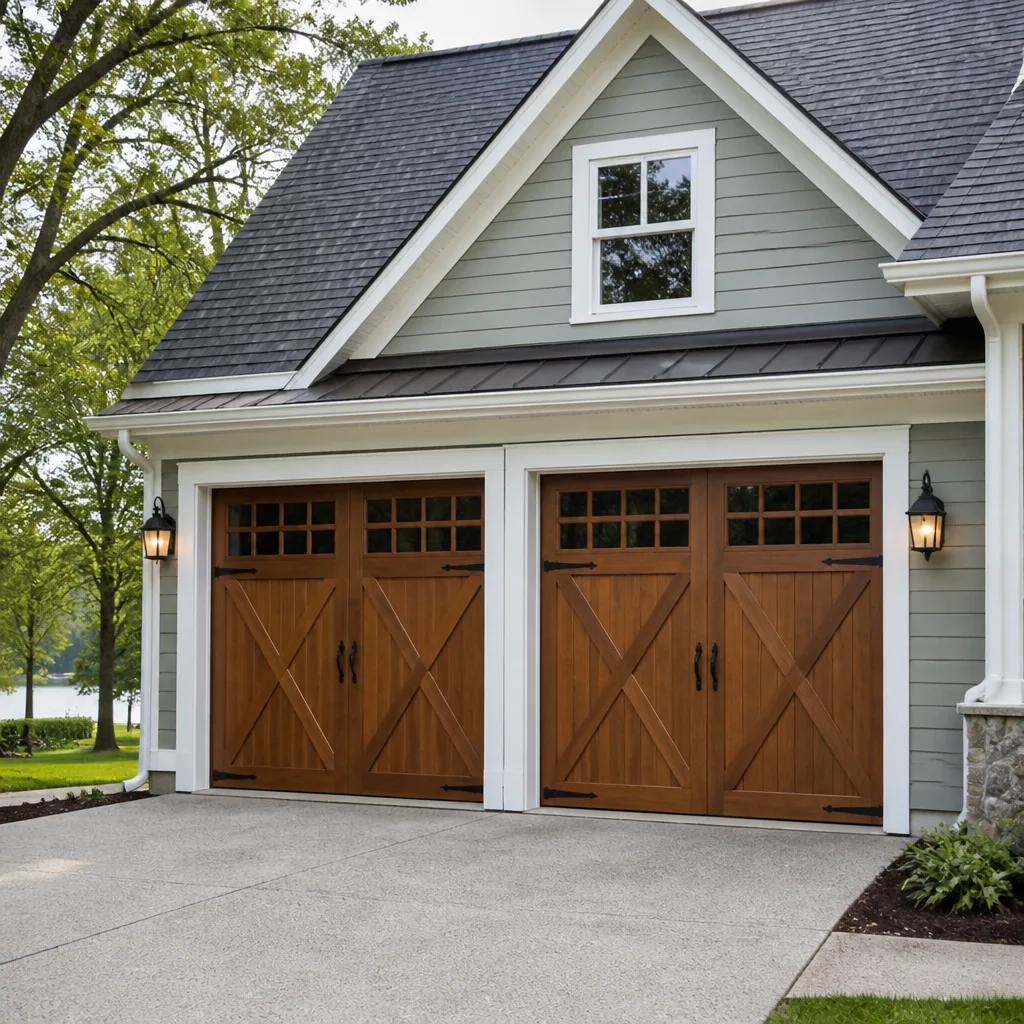 Carriage house
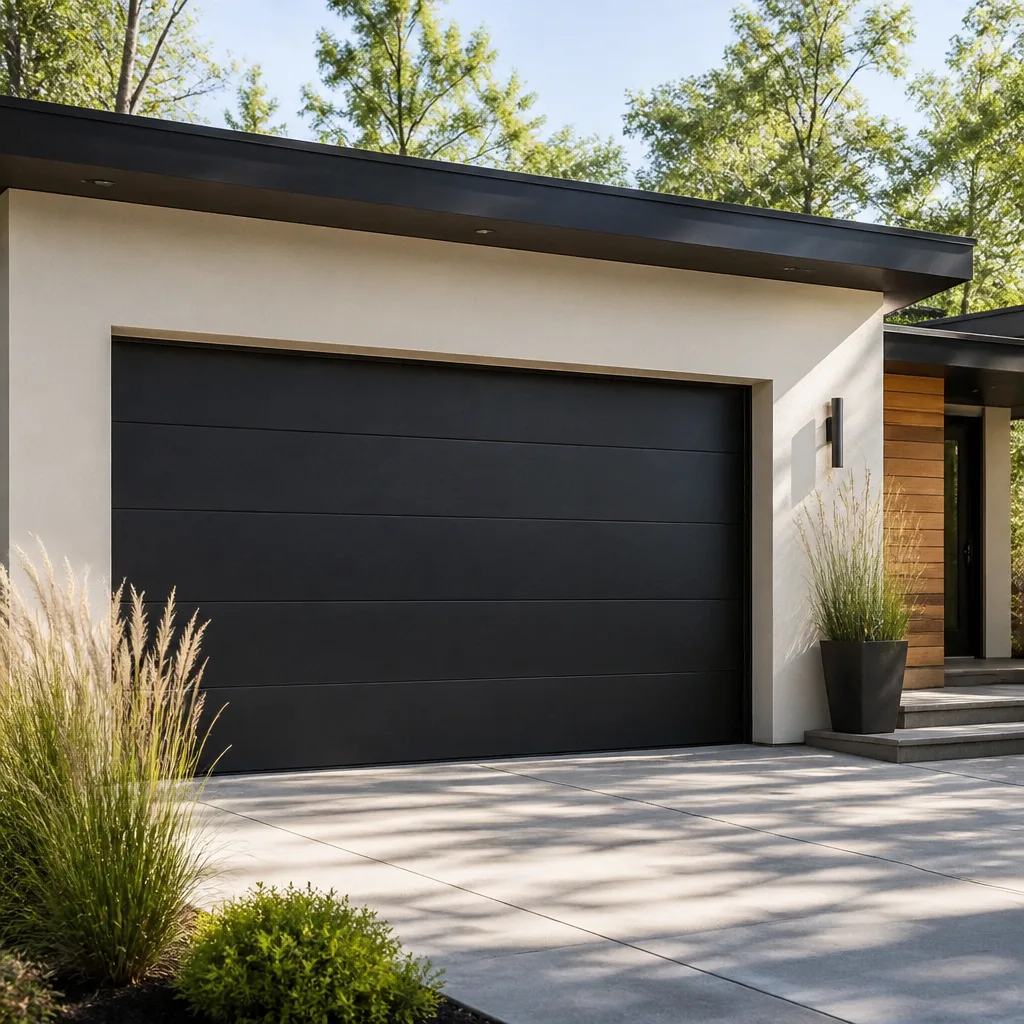 Modern flush
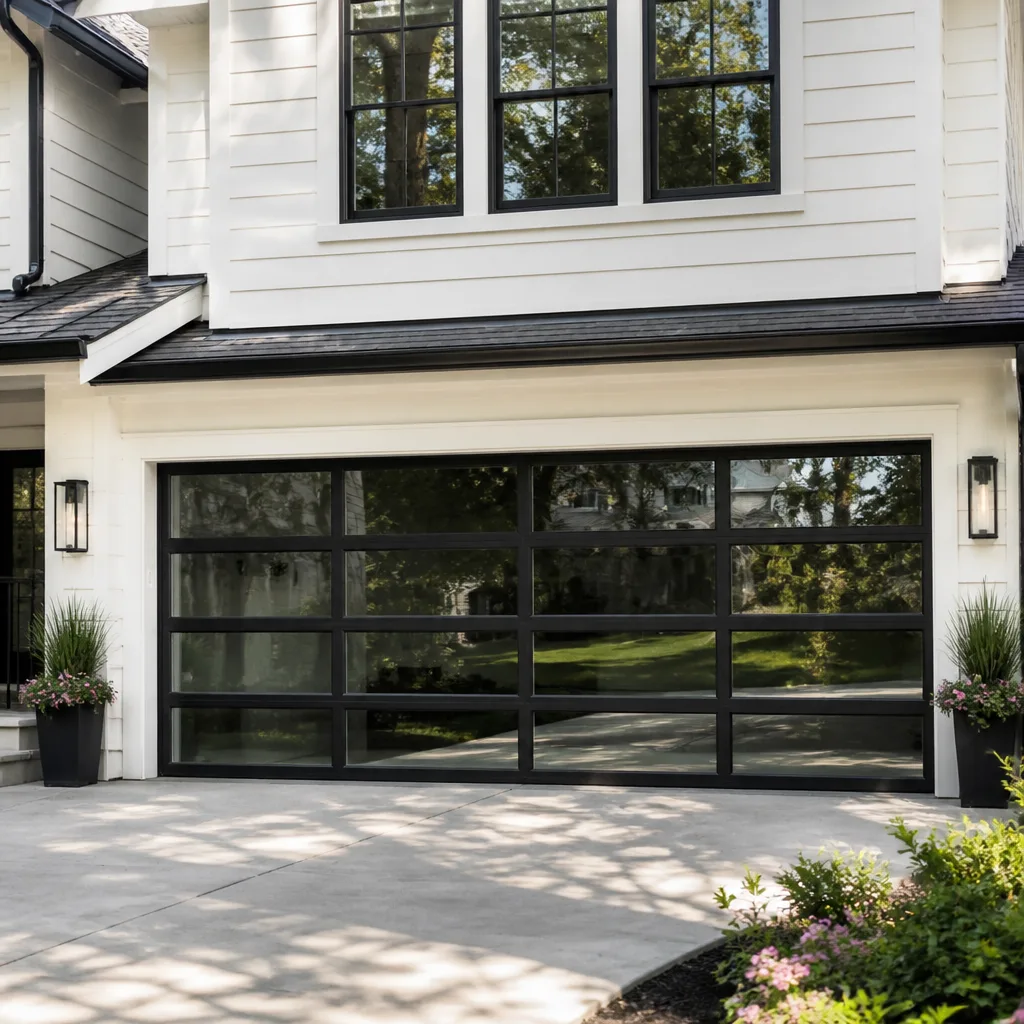 Full-view glass
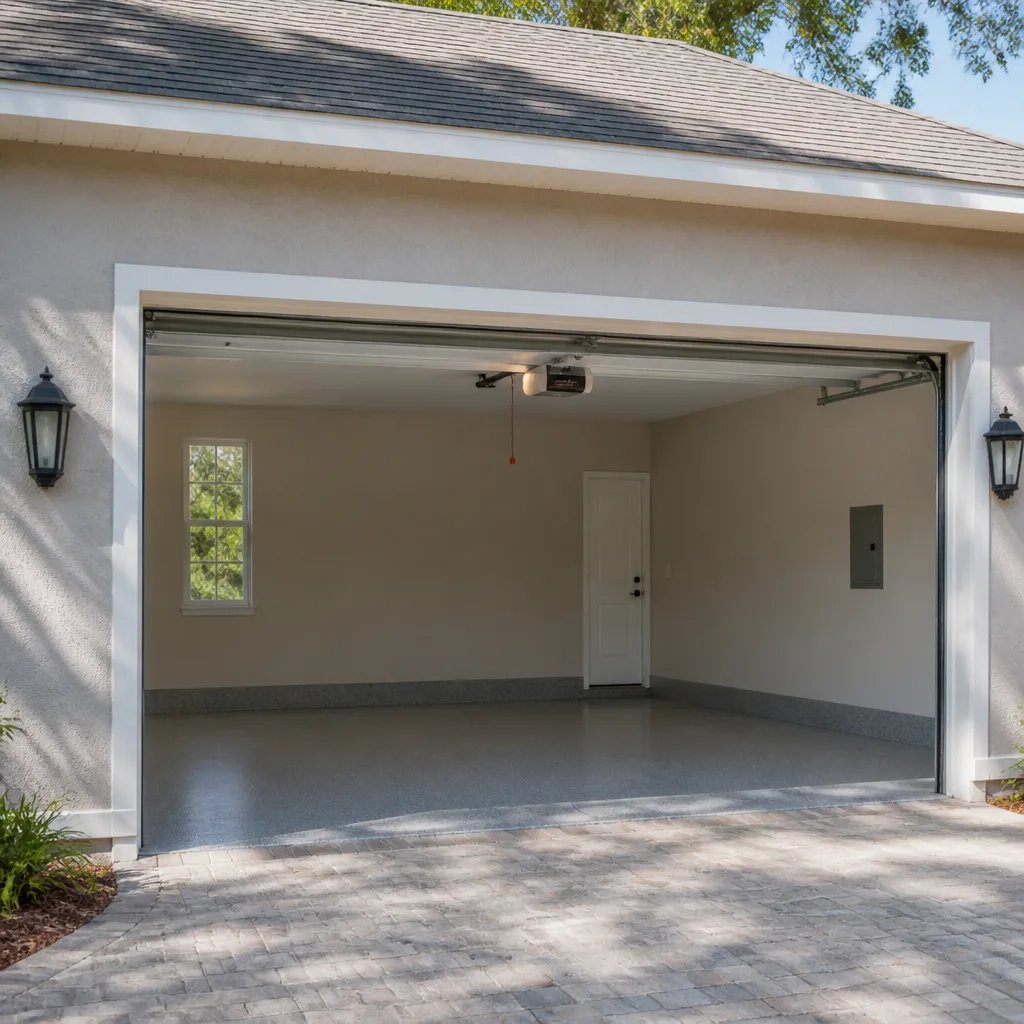 LiftMaster openers
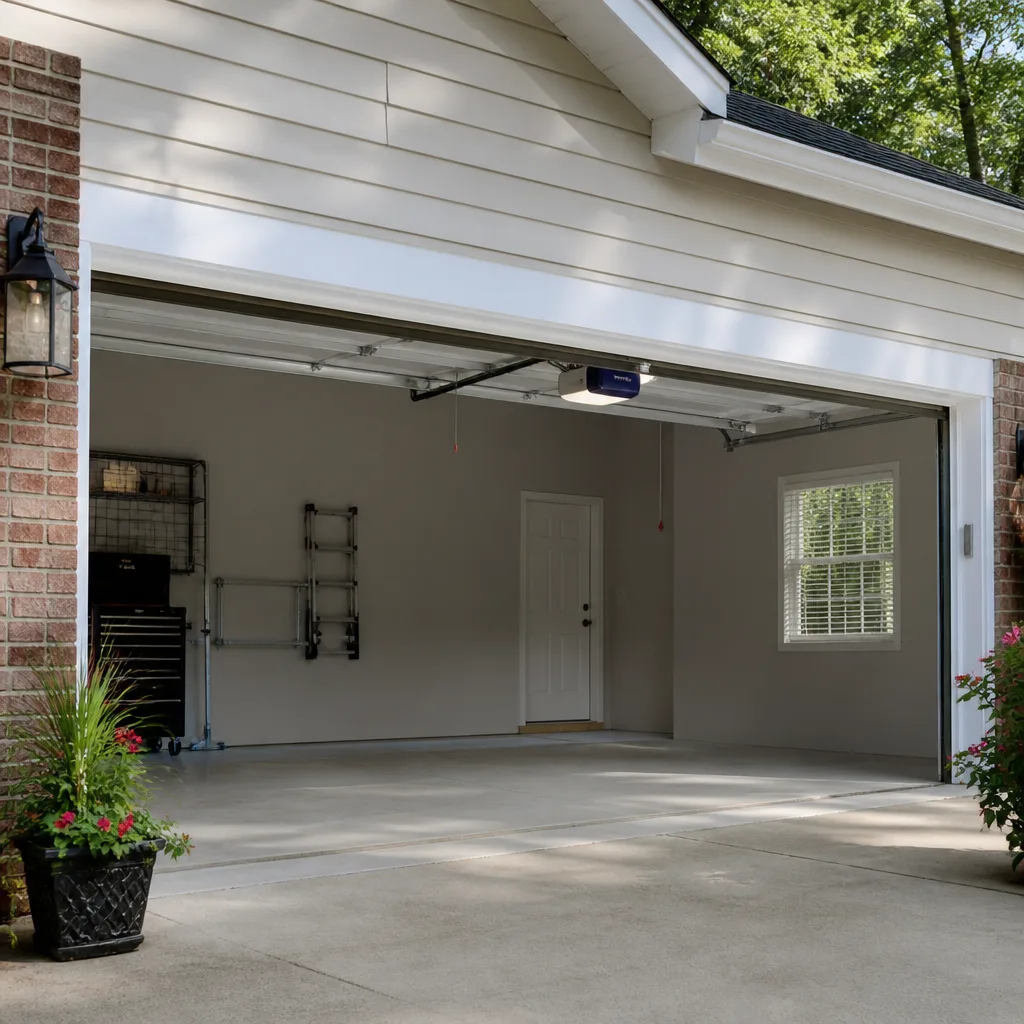 Chamberlain openers
Full 25-point door and opener safety check with every visit - springs, cables, rollers, tracks, and your LiftMaster or Chamberlain opener included
You get a price before we start. It does not change when the pro arrives.
Get your free estimateThe Complete Guide to Garage Doors in Syracuse
Most Syracuse homeowners replace a garage door based on looks alone, then call a technician within two years because the door they chose wasn’t built for what a Central New York winter actually does to hardware. It’s an easy mistake, because a door is a big visual purchase and the curb-appeal decision feels like the whole decision. It isn’t. A garage door here is an engineering decision first: a system of springs, seals, panels and an opener that has to survive lake-effect snow loads, freeze-thaw cycles, and temperature swings that can run 100°F from January to July. This guide walks through how that system actually behaves in Syracuse, what specs matter, and how to choose without overpaying for numbers that don’t help you.
Quick Answer
A garage door in Syracuse should be chosen on cold-weather performance, not looks: a steel door with functional insulation for an attached garage, a bottom seal that survives freeze-thaw, wind and snow load ratings that match Onondaga County conditions, and an opener sized to the door’s weight and torque. Buy the door and opener as one matched system, insist on corrosion-resistant hardware, and you’ll get a door that lasts through Central New York winters instead of one you’re repairing in two years.
Styles & brands we work with
- Raised-panel steel
- Carriage house
- Modern flush
- Full-view glass
- LiftMaster openers
- Chamberlain openers
Table of Contents
- How Freeze-Thaw Cycles Wear Out a Syracuse Garage Door
- R-Value Marketing vs. Real Insulation Performance in Zone 6
- Reading Wind and Snow Load Ratings for Onondaga County
- Why the Opener and Door Have to Be Spec’d Together
- Steel, Wood Composite, or Fiberglass: A Comparison Framework
- How to Evaluate Brands Without Brand Loyalty
- What Garage Door Work Costs in Syracuse
- Springs, Cables, and the Parts You Should Never Touch
How Freeze-Thaw Cycles Wear Out a Syracuse Garage Door
Syracuse’s freeze-thaw pattern is the single biggest cause of premature garage door wear here, and it hits three components harder than anything else. Water gets into a joint or a seal during a daytime thaw, refreezes overnight, expands, and pries the material apart a little more each cycle. Across a Central New York winter that’s dozens of expansion cycles, and the damage compounds silently until something fails.
The three parts that suffer most:
- Bottom seals. The rubber or vinyl seal at the floor line sits in meltwater every time snow slides off a car or the apron drains toward the door. When it stiffens and cracks, cold air and water get under the door, and the seal starts tearing away from the retainer. A seal that looks fine in October can be brittle and split by February.
- Torsion springs. Cold makes steel less ductile. A spring that’s already near the end of its cycle life is more likely to snap on the first hard cold snap than in mild weather, which is why spring failures cluster in winter. The metal doesn’t “freeze,” but the combination of cold, contraction, and a door that’s heavier to lift in freezing conditions puts maximum stress on the spring.
- Panel joints. Every seam between sections is a place where water collects and refreezes. On a steel door, that means the joint works loose and the paint film at the seam fails first, which is where rust starts. On a wood composite door, it means the seam swells and the sections stop closing flush.
What to prioritize to counteract it: a bottom seal rated for cold flexibility rather than a generic foam or vinyl strip, hardware with corrosion-resistant finishes (galvanized or coated hinges, rollers, and track), and a door with tight, well-sealed panel joints. In our experience, the doors that last in Syracuse are the ones spec’d for the climate at purchase, not the ones repaired most aggressively afterward. If a seal or a spring is already failing, that’s ordinary garage door repair territory and worth handling before the next cold stretch.
R-Value Marketing vs. Real Insulation Performance in Zone 6
R-value on a garage door label tells you how well the door’s center resists heat flow, and almost nothing about how the door performs as an installed system in a Zone 6 climate. The number is measured on the panel, not on the gaps around it. A door with an impressive R-value but poor perimeter sealing, a loose bottom seal, and uninsulated joints will underperform a modestly rated door that’s installed tight. That gap matters most in Syracuse, where the door faces a long, cold season rather than a brief cold snap.
What actually determines functional insulation performance for an attached garage:
- Perimeter and bottom sealing. Air infiltration around the edges is the biggest heat loss path, and it’s the first thing to fix. Seal condition matters more than the panel’s R-value.
- Panel construction. A polyurethane core holds insulation value better than a polystyrene core at the same nominal thickness, and it’s stiffer, which helps on a door exposed to wind.
- Thermal breaks. Steel is a conductor. A door with thermal breaks between the outer skin and the inner skin resists condensation and frost on the interior face, which is common on unbroken steel doors in cold climates.
- How the garage is used. An attached garage that shares a wall with living space benefits most from insulation. A detached, unheated garage gains less, and a door chosen mainly for durability and weather-tightness may serve you better than one chosen for a headline R-value.
The practical takeaway: treat R-value as one input, not the decision. Ask what the door’s sealing package includes and how the panels are built. A door that’s genuinely tight at the edges does more for a Syracuse garage than a higher number printed on a brochure.
Reading Wind and Snow Load Ratings for Onondaga County
Wind and snow load ratings describe what a door is engineered to withstand, and in Syracuse they’re worth checking rather than assuming. Lake-effect storms bring gusts and heavy, wet snow that can pile against a door, and a door rated for mild conditions is being asked to do more than it was built for. You don’t need to calculate loads yourself; you need to know the door you’re buying is rated for the conditions your location actually sees.
What the ratings mean in plain terms:
- Wind load rating reflects the pressure a door can resist across its face, expressed in pounds per square foot. Doors are commonly available in a standard residential rating and higher ratings for exposed or wind-prone sites. If your door faces open ground or sits at an exposed elevation, ask for the higher rating.
- Reinforcement matters as much as the rating. A door’s wind rating depends on its struts, hinges, and track gauge. A door “rated” for high wind but installed with light track and no reinforcement isn’t delivering the rating.
- Snow load is about what piles against the door, not what falls on the roof. Drifts against a door from a plow line or a roofline that dumps snow load the panels and track. A door with heavier-gauge track and reinforced panels handles that better.
Against Onondaga County’s typical winter, a standard residential rating is often adequate on a sheltered site, and a higher rating is worth the upgrade on an exposed one. The right answer depends on your specific door orientation and site, which is exactly the kind of question to settle before ordering rather than after. For questions specific to your location in Syracuse, ask during the measure.
Why the Opener and Door Have to Be Spec’d Together
An opener and a door are a matched pair, and buying them separately is the most common way Syracuse homeowners create a torque mismatch that shortens the life of both. The opener is sized to the door’s weight and the spring system’s balance. Put a heavier, insulated door on an opener rated for a lighter door and the motor works harder on every cycle, the rail flexes, and the safety reverse can drift out of adjustment. Put an oversized opener on a light door and you’ve paid for capacity you’ll never use.
What “spec’d together” actually means:
- Match lifting capacity to door weight. Insulated steel doors are heavier than uninsulated ones. The opener’s rated pull has to exceed the door’s weight with margin to spare.
- Confirm the door is balanced first. A properly balanced door should lift with minimal effort by hand (with the opener disconnected and the door in the correct position) because the springs carry the weight. If the springs are wrong, no opener will compensate correctly.
- Choose the drive type for the door and the garage. Belt drives run quieter, which matters if a bedroom sits above the garage. Chain drives are durable and cost less. Jackshaft openers suit doors with high-lift or unusual track configurations where a ceiling-mounted unit won’t fit.
- Plan for the features you’ll actually use. Battery backup keeps a door working through a power outage, which matters in a region with winter storms. Smart-home connectivity through brands like LiftMaster and Chamberlain lets you check and control the door from a phone. Decide before purchase so the opener and its accessories are matched from the start.
When a door and opener are bought as one system, the torque, the safety reverse, and the travel limits are all set for the exact combination. That’s the difference between a door that runs smoothly for years and one that needs adjustment every season. Dedicated garage door opener repair can fix a mismatched setup, but avoiding the mismatch in the first place costs less.
Steel, Wood Composite, or Fiberglass: A Comparison Framework
Material choice is where Syracuse’s climate does the most to separate doors that look similar in a showroom. The framework below is what to evaluate for each material in Central New York conditions, regardless of which brand you end up buying.
Steel
Steel is the most common residential choice, and in Syracuse it’s usually the right one if the finish and hardware are built for cold and moisture. Evaluate the gauge of the steel (heavier is stiffer and resists dents better), whether the panels have thermal breaks, and the quality of the factory finish. The weak points are panel seams and any exposed hardware, which is where rust begins after freeze-thaw cycles. A well-finished steel door with corrosion-resistant hardware handles Syracuse winters well and needs little beyond seal care.
Wood Composite
Wood composite offers the look of wood with better dimensional stability, but it’s more sensitive to moisture than steel, which matters in a climate with repeated freeze-thaw. Evaluate how the composite is sealed at the panel edges and joints, and expect to maintain that finish more carefully than on a steel door. It’s a reasonable choice for a homeowner who wants a specific look and is willing to keep up with the finish. It’s a poor choice if the door will be neglected.
Fiberglass
Fiberglass resists rust and dents better than steel and won’t corrode from road salt tracked in on a car, which is a real consideration in Syracuse. The tradeoff is cost and, on some constructions, less stiffness. Evaluate the panel construction and reinforcement, not just the surface material. For a homeowner who wants low maintenance and lives where the door takes a lot of salt spray from a wet car, fiberglass can be worth the premium.
The comparison to run: for each material, ask how it handles moisture at the seams, how it handles cold, and what maintenance the finish needs. The door that wins on those three questions for your specific garage is the right door, whatever the brand.
How to Evaluate Brands Without Brand Loyalty
Brand loyalty is a poor guide to buying a garage door, because the same manufacturer builds entry-level and premium lines, and the line matters more than the name. A better approach is to evaluate each brand’s specific product line against your door’s requirements, then compare. When you work with a provider that services multiple brands, the recommendation is driven by fit and budget rather than by what a single manufacturer wants sold.
A brand-agnostic evaluation framework:
- Check which line, not just which brand. Clopay, Amarr, and Wayne Dalton each offer budget through premium lines with different steel gauges and insulation. Ask which line you’re being quoted.
- Check part availability for the opener. Brands like LiftMaster, Chamberlain, Genie, and Craftsman have broad parts availability, which matters for long-term repairs. A less common opener system can be harder to service down the road.
- Check the door and opener together. A brand whose openers integrate well with common smart-home systems (LiftMaster and Chamberlain are strong here) is worth considering if you plan to control the door from a phone.
- Check the finish warranty, not the headline warranty. The finish is the part that fails first in Syracuse’s freeze-thaw climate. Look at what the finish warranty actually covers.
The reason to work across brands rather than settle on one is simple: your garage, your orientation, and your budget determine the right door, and no single manufacturer is right for every combination. A brand-agnostic recommendation is a fit recommendation, and that’s the one worth trusting.
What Garage Door Work Costs in Syracuse
Garage door work in Syracuse ranges from a few hundred dollars for a repair to a few thousand for a full replacement, and the exact price is set per job by a written estimate after the door is measured. The ranges below are typical, not binding, and the written estimate sets the final price. Repairs are usually quoted before any work starts, so there’s no invoice surprise afterward.
| Service | Typical estimated range |
|---|---|
| Torsion spring replacement (one spring) | $150 – $350 |
| Matched pair of torsion springs | About twice the single-spring figure |
| Garage door opener repair | $100 – $300 |
| New opener installation | $300 – $650 |
| Bottom seal replacement | $90 – $200 |
| Panel or section repair | $200 – $600 |
| New single-car door installed | $1,000 – $2,500 |
| New two-car door installed | $1,800 – $4,500 |
Two things drive the spread. Door size and weight raise the material and hardware cost. Insulation, feature upgrades like battery backup or smart connectivity, and premium finshes raise it further. On the repair side, a spring replacement is priced per spring, and because springs are almost always replaced together as a matched pair, budget for roughly double the single-spring figure. The final number is set by the written estimate, which is free, and the price is quoted and agreed before any work starts.
For a free estimate, call (855) 360-7984. We answer 24/7. Fast dispatch from 7am to 7pm, Sunday through Friday.
Springs, Cables, and the Parts You Should Never Touch
Torsion springs and the cables that run with them are under extreme tension and can cause serious injury, which is why they’re the one part of a garage door a homeowner should never adjust or replace. A torsion spring stores enough energy to lift a door weighing hundreds of pounds, and releasing that energy without the right tools and technique can maim. This is the one area where the honest answer is always: call a trained technician.
What you can safely check yourself:
- Look for a visible gap in a torsion spring (the coil over the door) or a snapped spring on a side-mounted extension type. That tells you the spring has failed. Don’t touch it; call for repair.
- Listen for a bang and notice if the door suddenly won’t lift or is very heavy. That’s a spring failure, and the door should not be operated until it’s repaired.
- Check the safety reverse. With the door closing, a properly set opener reverses on contact with an object. If it doesn’t, that’s an opener adjustment, not a spring job, but it’s worth fixing promptly.
- Check the bottom seal and the weather stripping for cracks and gaps. Those are safe to inspect and to have replaced.
Cables are equal caution: they run at high tension alongside the springs and a snapped cable can whip. Never try to remove a cable or a spring to “see if it’s the problem.” The correct path is a trained technician every time. Our technicians have up to 10 years of experience with these systems, and we’d rather come out for a proper diagnosis than have you take the risk.
Common Mistakes to Avoid
- Choosing a door on looks alone. In Syracuse, a beautiful door with poor seals and light hardware will need repairs within two winters. Spec for the climate first, then choose the finish.
- Buying the opener separately from the door. A torque mismatch between door and opener is the most common cause of premature opener wear and safety-reverse problems. Buy them as a matched system.
- Trusting the R-value number over the sealing package. A modest-R door installed tight outperforms a high-R door with leaky edges in a Zone 6 winter. Ask what the perimeter and bottom sealing includes.
- Ignoring wind and snow load ratings on an exposed site. A standard-rated door with light track on an exposed Syracuse elevation is being asked to do more than it’s built for. Match the rating to the site.
- Letting a failing bottom seal go through a winter. A cracked seal lets meltwater under the door and into the panel joints, where freeze-thaw starts. Replace it before the cold, not after.
- Assuming a less common brand will be easy to repair later. Parts availability varies. A door or opener from a brand with broad service support is easier to keep running.
- Attempting a spring or cable job yourself. This is the one that matters most. Springs and cables are under extreme tension and cause serious injury. Call a trained technician.
See the difference
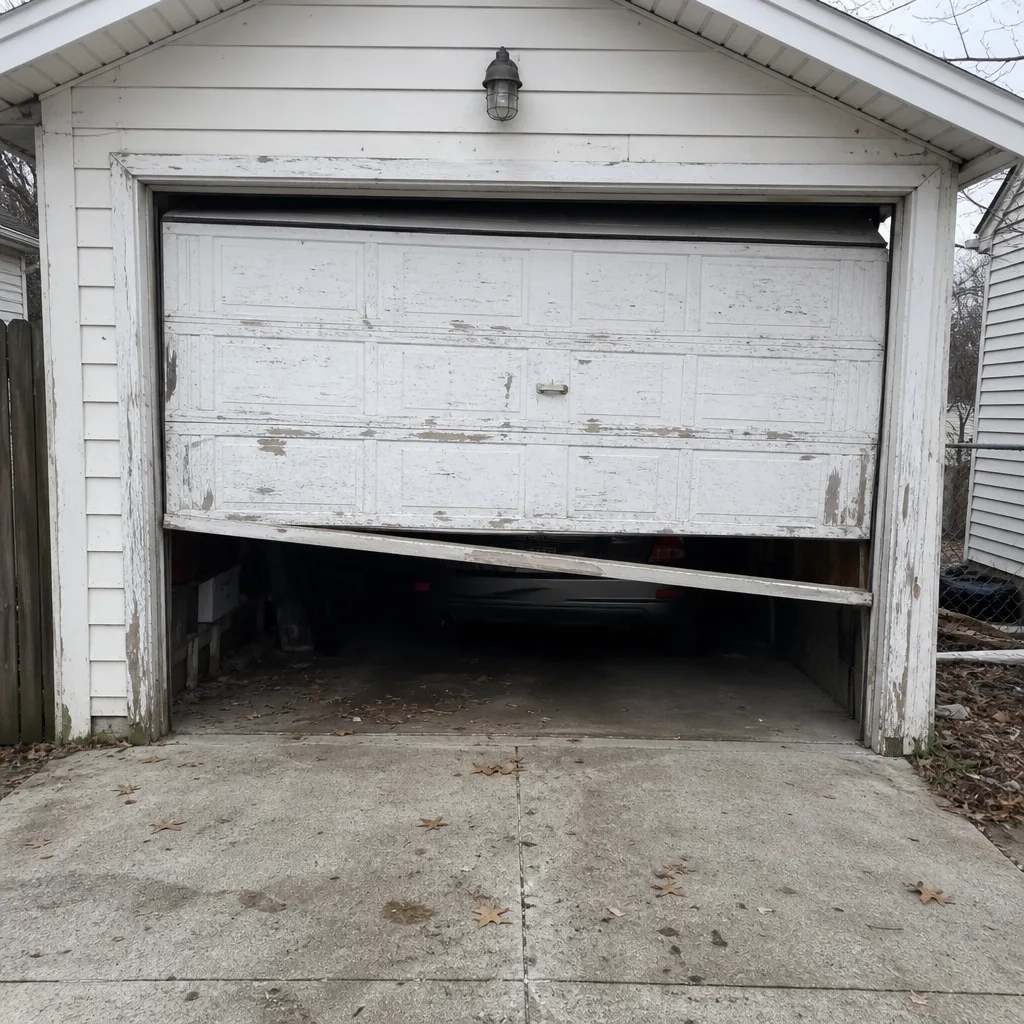 Before
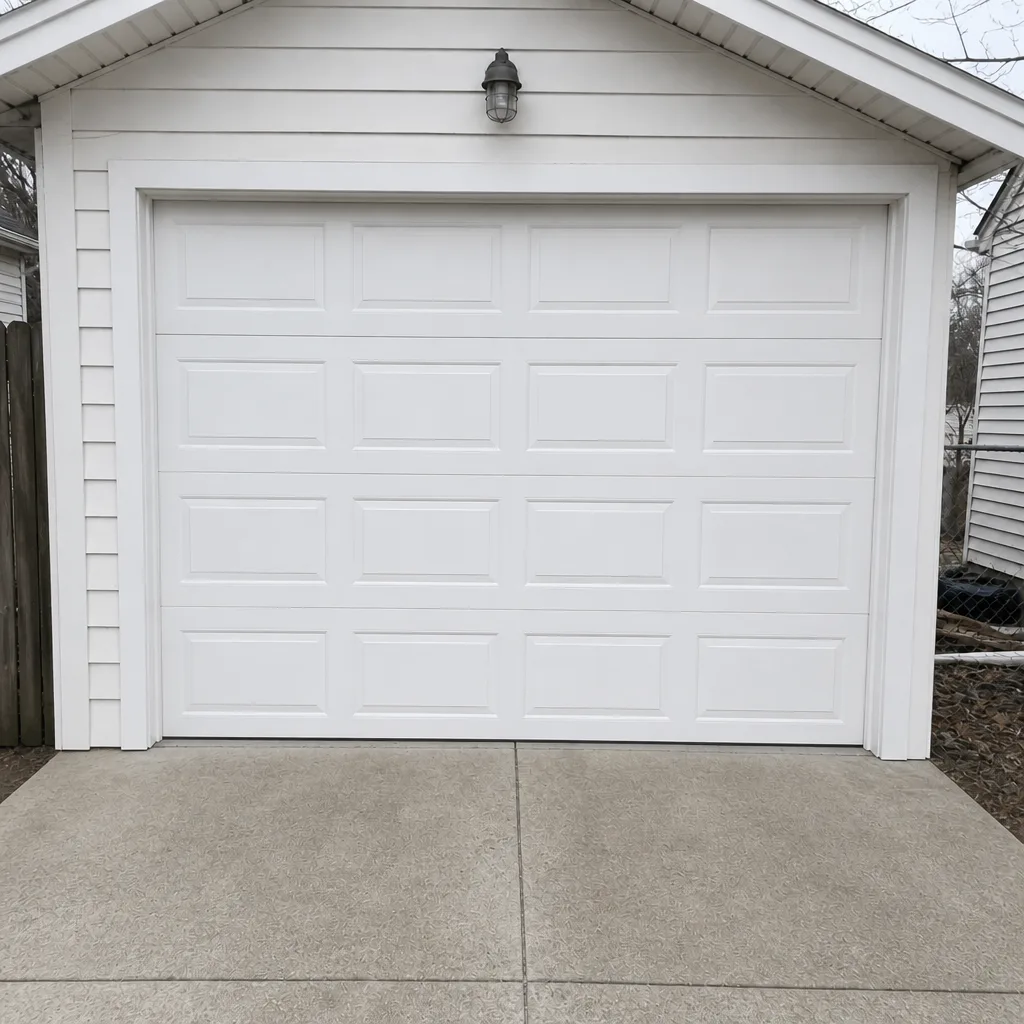 After
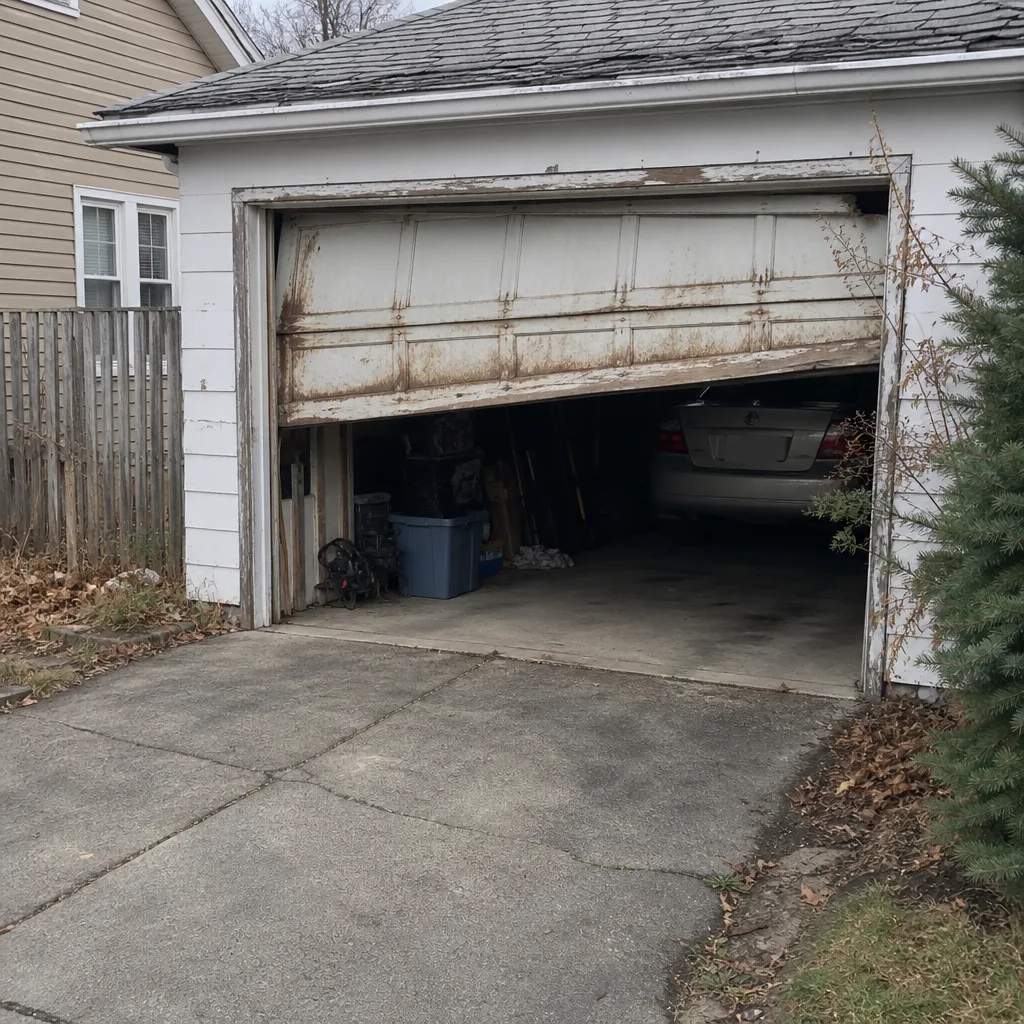 Before
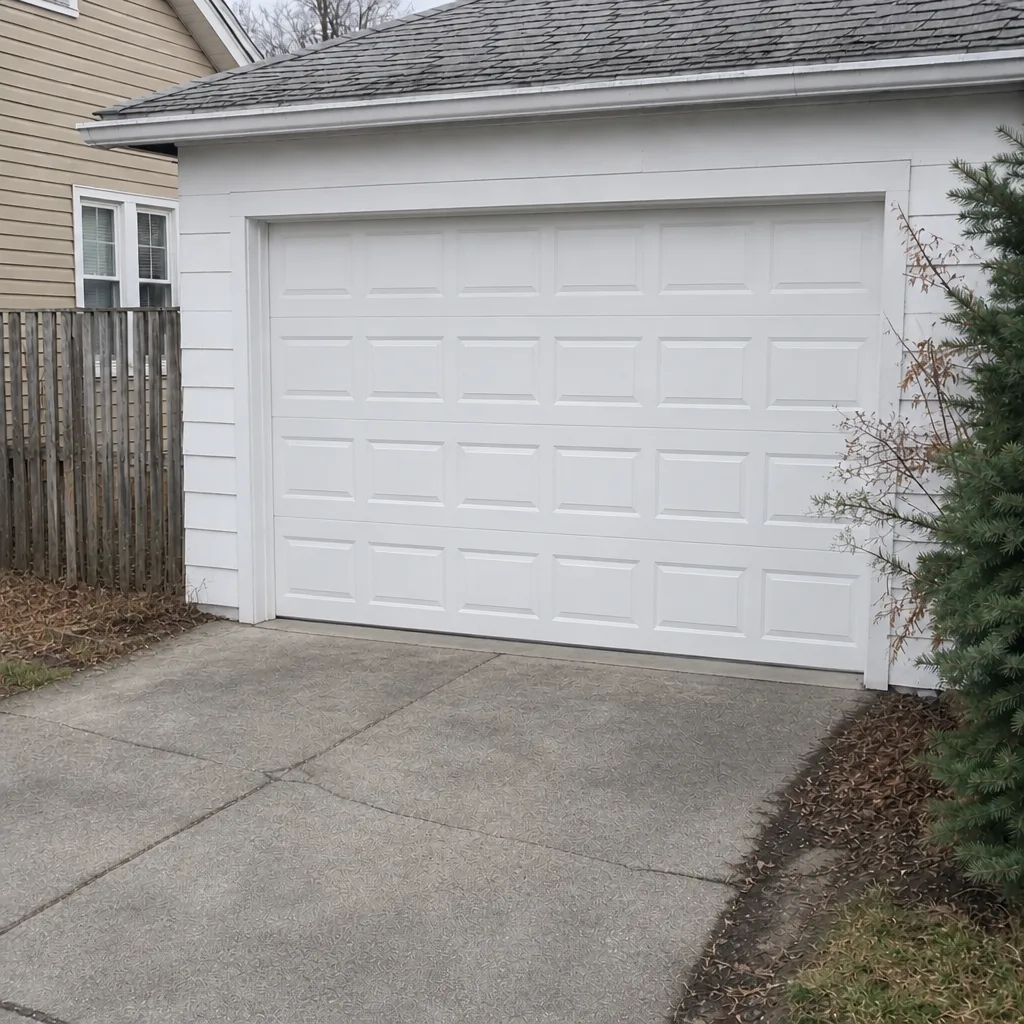 After
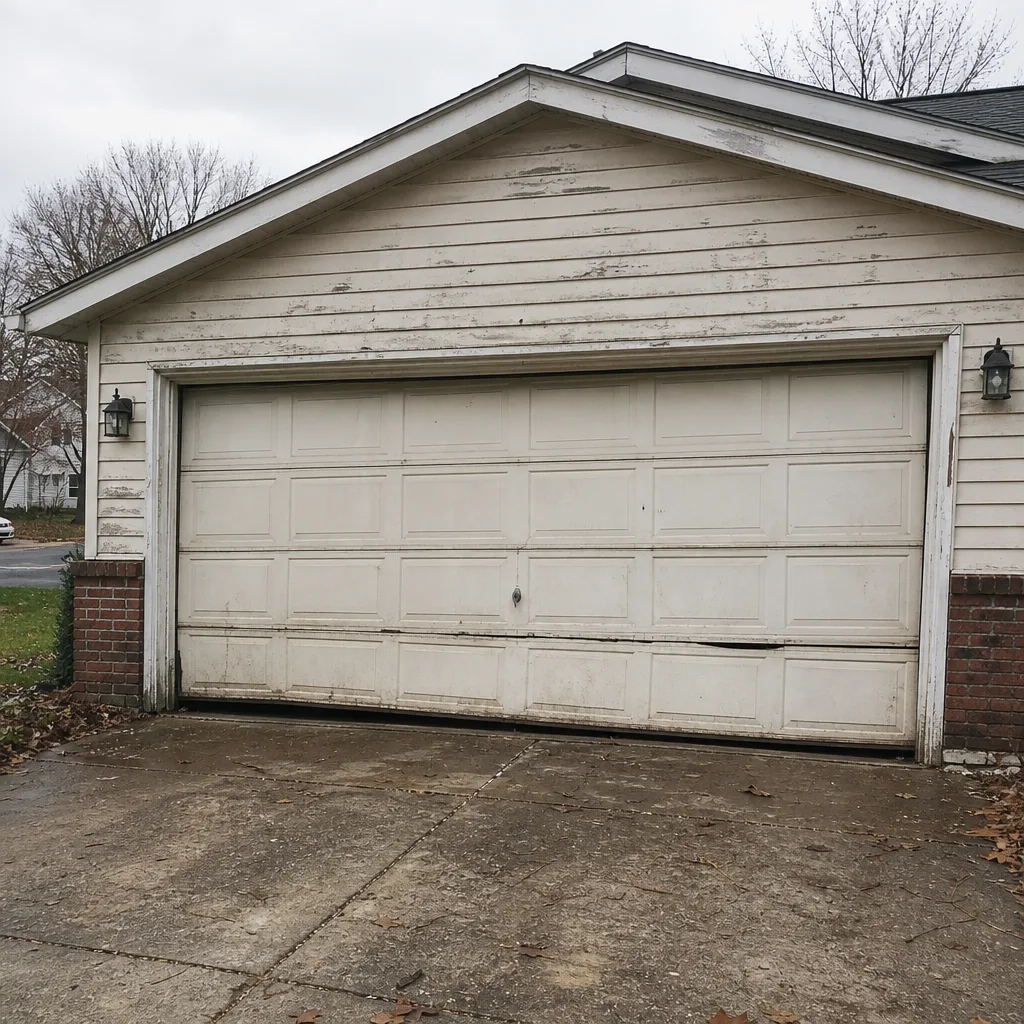 Before
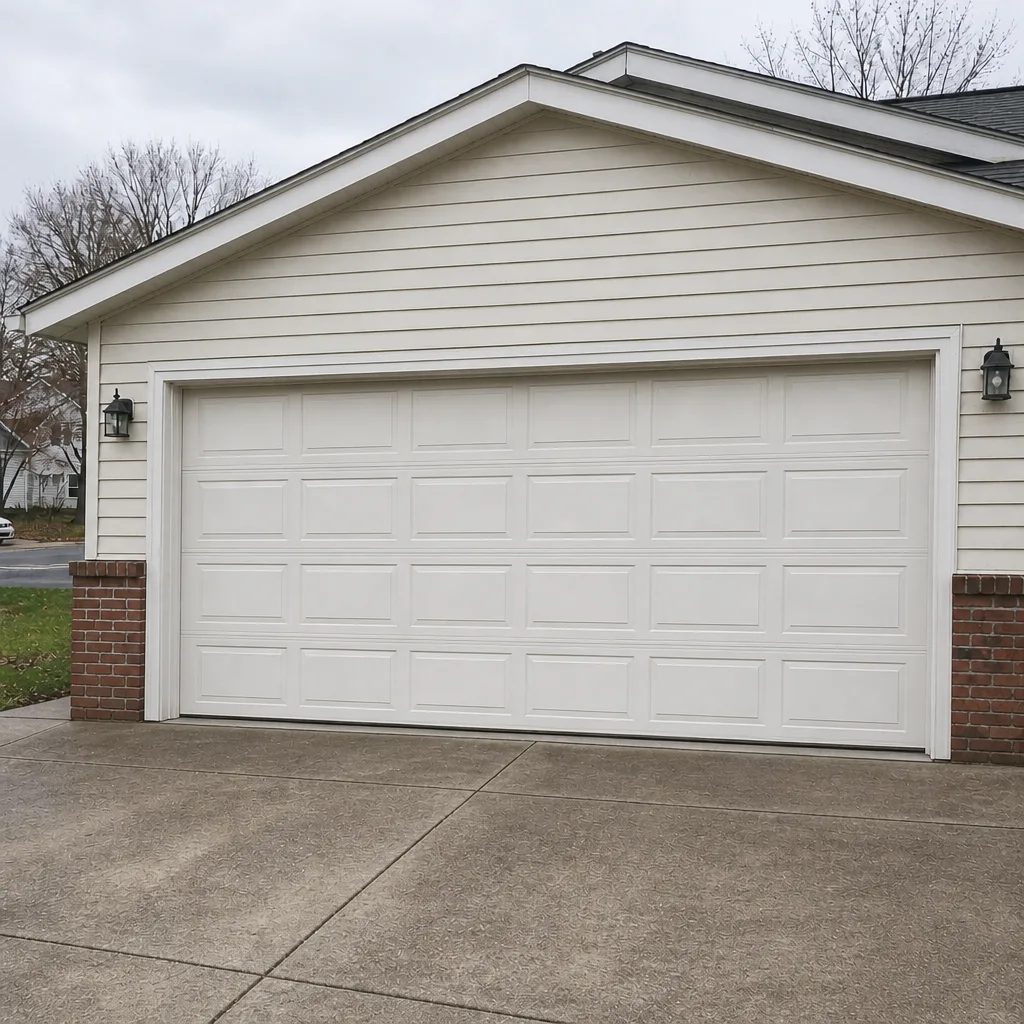 After
When to Call a Professional
Call a professional when the door is suddenly heavy or won’t lift (spring failure), when a cable is loose or snapped, when the opener reverses without an obstruction or won’t close the door fully, or when the bottom seal is cracked enough to let water under the door. Any of these is a job for a trained technician, not a weekend project. A door that’s out of balance, tracks poorly, or runs loudly is also worth a look before it fails outright. Southgate Garage Door Service offers free estimates in Syracuse – call (855) 360-7984. We work on what you already have, and we’ll tell you honestly whether a repair is the right fix or a new door delivers better long-term value.
Frequently Asked Questions
A well-spec’d steel door with good seals and corrosion-resistant hardware typically lasts 15 to 20 years in Syracuse’s climate, while a door chosen on looks alone with light hardware often needs major repairs within two winters. The difference is whether the door was spec’d for freeze-thaw and cold at purchase. If your door is rusting at the panel seams or the springs are failing repeatedly, it may be time to consider replacement. Call (855) 360-7984 for a free estimate.
For an attached garage in a Zone 6 climate, a door with a polyurethane core and thermal breaks between the steel skins is the practical choice, because it resists condensation and holds its insulation value better in cold. But the perimeter and bottom sealing matter more than the headline R-value, so prioritize a tight install. The right spec depends on how the garage is used. A free measure will settle it with a written price.
Not a special class of door, but you do need a door with wind and snow load ratings matched to your site, and reinforced track and hinges if the door is exposed. Lake-effect storms bring gusts and wet snow that a lightweight, standard-rated door with light track handles poorly. Match the rating to your orientation and exposure. Call (855) 360-7984 and we’ll assess it during the measure.
Most Syracuse garage door repairs fall between $100 and $350 for common jobs like a single torsion spring replacement or opener repair, with larger panel or section work running higher. A matched pair of springs costs about twice the single-spring figure because springs are replaced together. The written estimate sets the final price, and it’s free. Call (855) 360-7984 for an exact quote.
In most cases the opener can be repaired rather than replaced, and that’s the first thing to check. We work on openers from LiftMaster, Chamberlain, Genie, and Craftsman, among others, so whether it’s a legacy unit or a newer smart-home model, we can diagnose it. A repair is usually the right fix unless the opener is undersized for the door. Call (855) 360-7984 for a free estimate.
No. The written estimate is the price, and it’s quoted and agreed before any work starts. We measure and assess during the free estimate, and that’s when the final number is set, not after the work is done. If we find something during the job that changes the scope, we’ll talk to you before proceeding. Call (855) 360-7984 to schedule a free estimate.
The Bottom Line
A garage door in Syracuse is a system, not a product, and the choices that matter are the ones built for Central New York: cold-flexible bottom seals, corrosion-resistant hardware, tight panel joints, insulation that performs after installation rather than just on the label, wind and snow ratings matched to your site, and an opener spec’d with the door. Get those right and you have a door that runs through winters instead of being repaired through them. Get them wrong and you’re back to the same decisions within a couple of years. We work on what you already have and on the new door you’re choosing, and we’ll give you the right fix rather than the easiest upsell. Whether it’s a broken spring or a full new door, Southgate Garage Door Service can help: call (855) 360-7984 for a free estimate. We answer 24/7. Fast dispatch from 7am to 7pm, Sunday through Friday. Learn more at Southgate Garage Door Service.
Written by the team at Southgate Garage Door Service.